Add it to your home screen and it opens full screen — no browser bars, one tap away, and everything stays signed in. Free, nothing to download from an app store.
- Tap the Share button in your browser
- Scroll down and choose “Add to Home Screen”
- Open GrowSomeFood from your home screen
- Open your browser’s menu
- Choose “Add to Home screen” or “Install app”
- Open GrowSomeFood from your home screen
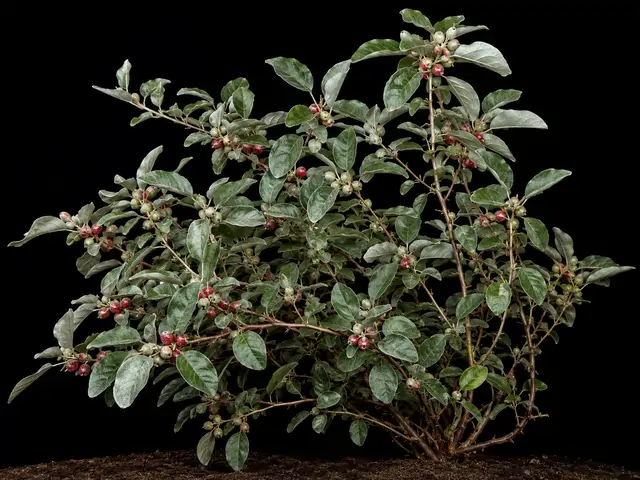
Autumn Olive
Autumn olive is not poisonous - its speckled red berries are genuinely edible (tart, lycopene-rich 'autumnberries'), and the seeds are edible too. That edibility is NOT a reason to plant or keep it: it is a serious invasive that forms dense thickets, spreads by bird-dropped seed, and fixes nitrogen in ways that alter the soil and favor other invaders. If foraging from an existing stand, use unsprayed shrubs only, and never plant or spread any seed or cutting. Do not plant it.
Overview
An invasive shrub that forms dense thickets and alters the soil by fixing nitrogen - even though its berries are genuinely edible. Never plant it (edibility is no excuse); this entry is for identifying and controlling it.
Autumn olive (Elaeagnus umbellata) is a fast-growing, thicket-forming invasive shrub across the eastern US, Midwest, and Southeast - and a good example of an honest paradox: its berries are genuinely edible and even nutritious, yet it must not be planted. Introduced from Asia and once widely promoted for wildlife and erosion control, it escaped to invade old fields, pastures, roadsides, forest edges, and open woods, forming dense thickets that crowd out native plants.
It has a special trick that makes it more than an ordinary weed: as a nitrogen-fixer, it enriches the soil it grows in - which sounds good but actually alters soil chemistry in ways that favor more invaders and disrupt native plant communities adapted to leaner soils. It spreads prolifically by bird-dropped seed. The edible berries (tart, lycopene-rich 'autumnberries' beloved by foragers) are real - but foraging an existing stand is very different from planting one, and 'it's edible' is no reason to keep a serious invasive. This entry is here to help you recognize and control autumn olive (and forage it responsibly if you wish), and to point you to native berry shrubs instead. Never plant it.
At a glance
- Sun
- Full sun · Part sun · Part shade
- Water
- Medium
- Spacing
- 36–240 in (typ. 96)
- Mature height
- 72–240 in (typ. 168)
- Start by
- Direct sow · Cuttings
- Frost
- Hardy
When to plant
No planting window on record for this zone.
Life stages
- Silvery thicket growth (identify & control) Apr, May, Jun, Jul, Aug, Sep, Oct (yearly)
-
Recognize it: silvery-backed leaves, speckled twigsAutumn olive is a fast, spreading shrub with oval leaves that are dull green above and distinctly SILVERY-SCALY underneath - a flash of silver when the wind turns them is the giveaway. Young twigs are silvery to golden-brown and speckled with tiny scales, sometimes with scattered thorns. It forms dense multi-stemmed thickets on open, disturbed ground. Silvery leaf undersides plus a fast thicket habit point to autumn olive.
-
Pull seedlings, cut-stump-treat larger shrubs (it resprouts)Pull or dig seedlings and small shrubs when soil is moist, getting the roots. For larger shrubs, cut and immediately treat the cut stumps with herbicide, or use basal-bark treatment - cutting or mowing alone triggers vigorous resprouting. Prioritize removing fruiting shrubs to stop bird-spread seed. Bag berries; never let seed or cuttings spread.
Oval leaves silvery-scaly underneath (silver flash in the wind)Silvery/golden speckled twigs, sometimes thornyDense multi-stemmed thickets on open, disturbed ground -
Recognize it: silvery-backed leaves, speckled twigs
- Spring fragrant flowers Apr, May, Jun (yearly)
-
Small, very fragrant pale-yellow flowersIn late spring autumn olive is covered in small, tubular, pale creamy-yellow flowers that are intensely, sweetly fragrant - often smelled before the shrub is seen. Pretty and pollinator-visited, but flowering means the heavy berry crop (and heavy seed spread) is coming. A fragrant flowering thicket is a seed source to prioritize for removal.
Small, intensely fragrant pale-yellow flowers in late springA shrub about to set a heavy berry cropPollinators drawn to a spreading thicket -
Small, very fragrant pale-yellow flowers
- Silver-speckled red berries & spread Aug, Sep, Oct, Nov (yearly)
-
Abundant red berries flecked with silver scalesBy late summer and fall the shrub bears heavy crops of small round berries that ripen red, dotted with tiny silvery-to-brown scales. The berries are edible (tart, lycopene-rich 'autumnberries'), but each holds a seed, and BIRDS gorge on them and scatter the seed widely - the main way autumn olive invades new ground. Abundant silver-speckled red berries are a strong ID feature and the engine of its spread.
-
Remove fruiting shrubs to stop bird-spread seedPrioritize removing fruiting shrubs to cut off the bird-spread seed, and clear seedlings around them. If you forage the berries from an existing unsprayed stand, that's fine - but never plant it or spread the seed, and don't let 'it's edible' become a reason to keep an invasive.
Heavy crops of red berries flecked with silver scalesBirds gorging on and spreading the seedSeedlings spreading into fields, edges, and open woods -
Abundant red berries flecked with silver scales
Watch out for
Smothering Thickets (ecological harm) Disorder HighApr, May, Jun, Jul, Aug, Sep, Oct
The core hazard is ecological: Chinese privet forms dense thickets that shade out and eliminate native wildflowers, shrubs, and tree seedlings, degrading forests, floodplains, and streambanks into near-monocultures with little wildlife value.
Watch for: Dense stands of small-leaved semi-evergreen shrubs choking woodland understory, fencerows, and streamsides, especially green thickets in the winter woods.
Prevent: Never plant it; remove seedlings and small clumps early, and take out fruiting shrubs before birds spread the seed.
Treat: Dig or hand-pull small plants (get the roots), cut-stump or basal-bark herbicide on larger stems, treat regrowth, and replant with natives; cutting alone causes vigorous resprouting.
Bird-Spread Seed & Root Suckering Disorder HighAug, Sep, Oct, Nov, Dec
Why it spreads so far and resists control: privet produces abundant blue-black berries that birds carry deep into intact forest, while root suckers and stump resprouts rebuild each clump after cutting.
Watch for: Seedlings appearing far from any planting, carpets of seedlings under mature shrubs, and vigorous resprouting after cutting or mowing.
Prevent: Remove fruiting shrubs to cut off the seed supply; never compost or dump berry-laden clippings; clear seedlings before they mature.
Treat: Address both seed source and roots: remove fruiting shrubs, dig or cut-stump-treat clumps to kill the roots, and follow up for several seasons against the seed bank.
Soil Alteration by Nitrogen Fixation Disorder MediumApr, May, Jun, Jul, Aug, Sep, Oct
A subtler ecological hazard: as a nitrogen-fixer, autumn olive enriches the soil with nitrogen, disrupting native plant communities adapted to lean soils and favoring other weedy invaders - so its impact persists and can degrade a site beyond the shrub itself.
Watch for: Autumn olive establishing on poor, infertile ground, followed by flushes of weeds and other invaders in the enriched soil.
Prevent: Remove autumn olive before it establishes and enriches the soil; avoid planting it on reclamation or lean sites.
Treat: Remove the shrubs and monitor the site for follow-on weeds; restore with natives suited to the (now altered) soil.
Varieties · 3
The invasive shrub: a fast, thicket-forming shrub with silvery-backed leaves and speckled twigs, fragrant spring flowers, and heavy crops of silver-flecked red berries spread by birds. It fixes nitrogen and alters soils to favor invaders. Its berries are genuinely edible ('autumnberries'), but it must never be planted - identify and control.
Instead of autumn olive, plant native berry shrubs that feed wildlife (and you) without the invasion - serviceberry, elderberry, chokeberry (aronia), native viburnums, or American beautyberry. Ask a local native-plant source for the best options for your area.
Close relatives sold or planted similarly are also invasive - notably Russian olive (Elaeagnus angustifolia, worse in the West and Plains) and thorny/silverberry elaeagnus. Same lesson: identify and control, never plant; choose native shrubs instead.
Grow
How to recognize it and why never to plant it: a fast thicket shrub with silvery-scaly leaf undersides and speckled twigs, fragrant spring flowers, and silver-flecked red berries, that spreads by bird-dropped seed and fixes nitrogen.
You should never plant autumn olive - recognizing it is what counts. It's a fast-growing, spreading, often multi-stemmed shrub with oval leaves that are dull green above and distinctly silvery-scaly underneath - a flash of silver when the wind flips them is the classic clue. Young twigs are silvery to golden-brown and speckled with tiny scales, sometimes bearing scattered thorns. In late spring it's covered in small, intensely fragrant pale-yellow flowers, followed in late summer by heavy crops of small red berries flecked with silver scales.
Its whole biology favors invasion. It grows fast, tolerates poor, dry, and disturbed soils, and - as a nitrogen-fixer - actually improves the soil for itself and other weeds, thriving where natives adapted to lean soils struggle. It spreads mainly by seed: birds gorge on the abundant berries and scatter the seed across fields, edges, and open woods. It also resprouts vigorously when cut. Understanding this - fast thicket growth, silver-flashing leaves, prolific bird-spread seed, and soil-altering nitrogen fixation - is exactly why it belongs in the 'never plant' category, edible berries or not.
Propagation & seed saving
How it spreads - and why it's persistent: birds scatter enormous quantities of seed from the edible berries, seeds germinate readily in disturbed ground, and cut shrubs resprout vigorously from the stump.
Autumn olive spreads chiefly by seed, in huge quantity. A mature shrub produces heavy crops of berries - often tens of thousands - and birds gorge on them and scatter the seed far and wide, planting new shrubs across fields, fencerows, edges, and open woods, nowhere near any original planting. The seeds germinate readily, especially in disturbed and open ground, and the shrub grows and fruits young, so infestations build quickly.
It also resprouts vigorously from cut or mowed stumps, so cutting alone doesn't kill it - it comes back thicker. This combination - prolific bird-spread seed plus tenacious resprouting - is what makes it hard to eradicate. And its nitrogen-fixing habit reinforces its spread by enriching the soil in ways that favor it and other weedy invaders. Effective control has to address both the seed source (remove fruiting shrubs) and the roots (cut-stump or basal-bark herbicide, not just cutting), then follow up on seedlings and resprouts for several seasons.
Care
Control, not care: pull seedlings, cut-stump-treat or basal-bark larger shrubs (they resprout), prioritize removing fruiting shrubs to stop seed, forage berries only from existing stands, and replant with native shrubs.
For autumn olive, 'care' means removal, and because it resprouts hard when cut, cutting alone backfires. Scale the method: pull or dig seedlings and small shrubs when the soil is moist, getting the roots; for larger shrubs, cut and immediately treat the cut stumps with herbicide (cut-stump treatment) or use a basal-bark application; treat leafy regrowth with foliar herbicide where appropriate. Mowing or plain cutting just makes it resprout thicker.
Prioritize removing fruiting shrubs to shut off the bird-spread seed, then clear the seedlings around them and follow up for several seasons against resprouts and the seed bank. If you'd like to make use of an existing stand before removing it, you can forage the berries (from unsprayed shrubs only) - but never plant it, never spread the seed, and don't let 'it's edible' become an excuse to keep it. Then replant with native berry shrubs that feed wildlife without the invasion - serviceberry, elderberry, chokeberry, native viburnums, or American beautyberry. For large infestations in fields or natural areas, local extension offices and invasive-plant programs can advise on region-specific control.
Nutrition
Honestly, the berries are edible and nutritious (tart, lycopene-rich 'autumnberries') - but that's no reason to plant it. Ecologically it's a net negative: it forms thickets and its nitrogen fixation alters soils to favor invaders.
Here's the honest paradox of autumn olive: its berries are genuinely edible and nutritious, yet the plant must not be grown. The small red 'autumnberries' are tart and tasty, made into jams, sauces, and fruit leathers, and they're notably rich in lycopene (the antioxidant also found in tomatoes) - a real foraged food that has a small following. The whole berry, seed included, is edible.
But none of that outweighs its ecological damage. Autumn olive forms dense thickets that crowd out native plants, and as a nitrogen-fixer it does something subtly harmful: it enriches the soil with nitrogen, which disrupts native communities adapted to lean soils and favors other weedy invaders, so an autumn-olive invasion can degrade a site in ways that persist. Its berries feed birds - which is exactly how it spreads - but that's far outweighed by the native habitat it displaces. So the sensible stance mirrors kudzu and knotweed: if you have an existing unsprayed stand, forage the berries as a small way to use an invasive - but never plant it, never spread the seed, and put natives in its place. The right relationship is removal, with a berry harvest as a consolation prize.
History
Introduced from Asia and widely promoted through the mid-1900s for wildlife food, erosion control, and windbreaks, autumn olive escaped to become a widespread invasive - a textbook case of a well-intentioned planting gone wrong.
Autumn olive was introduced from eastern Asia and, through the mid-20th century, widely promoted and distributed by conservation agencies for exactly the traits that later made it a menace: it was planted en masse for wildlife food, erosion control, mine-land reclamation, windbreaks, and hedgerows, prized as a tough, fast shrub that fixed its own nitrogen, thrived on poor soils, and fed birds. Millions were planted across the eastern and midwestern US.
Then the birds did their work. The very fruitfulness that made it 'good for wildlife' let it escape everywhere, as birds scattered its seed across fields, edges, and open woods, and its nitrogen-fixing habit helped it entrench and degrade sites. By the late 20th century it was recognized as a serious invasive, and the agencies that once handed out seedlings now warn against it. Its story is one of the clearest cautionary tales in American conservation: a plant deliberately spread for good reasons that became a widespread invasive - proof that 'good for wildlife' and 'tough and useful' are not the same as 'belongs here,' and that even well-intentioned plantings of vigorous non-natives can backfire at landscape scale.
Troubleshooting
Confirm it (silvery-backed leaves, speckled twigs, fragrant spring flowers, silver-flecked red berries), don't plant it, cut-stump-treat or pull it (it resprouts), forage only from existing stands, and replant natives.
Is this autumn olive? Look for a fast, thicket-forming shrub with oval leaves that are dull green above and silvery-scaly underneath (a silver flash in the wind); silvery-to-golden speckled twigs, sometimes thorny; intensely fragrant small pale-yellow flowers in late spring; and heavy crops of small red berries flecked with silver scales in fall. (Related Elaeagnus - Russian olive, thorny/Elaeagnus umbellata kin - are similar and also invasive.) Can I eat the berries? Yes - they're edible and lycopene-rich, fine to forage from existing unsprayed stands; but that's no reason to plant or keep the shrub. How do I remove it? Pull seedlings (get the roots); for larger shrubs, cut and immediately treat the stumps with herbicide, or basal-bark - cutting alone triggers resprouting. Which shrubs first? Fruiting shrubs, to stop the bird-spread seed. It grew back: expected - it resprouts and seeds heavily; persist for several seasons. What should I plant instead? Native serviceberry, elderberry, chokeberry, native viburnums, or beautyberry.
Growing across climates
Invasive across a broad range - the East, Midwest, and Southeast (roughly zones 4-9) - thriving on poor, disturbed, open ground; very cold-hardy and adaptable, with its nitrogen fixation letting it colonize lean soils.
Autumn olive is invasive across a broad swath of the eastern US, Midwest, and Southeast (roughly zones 4-9), and it's notably cold-hardy and adaptable. It's a classic colonizer of open, disturbed, poor ground - old fields, pastures, reclaimed mine land, roadsides, fencerows, forest edges, and open woods - in full sun to part shade. Its nitrogen-fixing ability is a key advantage: it can establish on lean, infertile soils where many plants struggle, then enrich them in ways that favor itself and other invaders.
Because it's so cold-hardy and broadly adaptable, and because birds carry its seed far and wide, few areas within its range are safe to assume it 'won't do well.' It's especially a problem where old conservation and reclamation plantings became seed sources. Wherever you are in its range, the guidance holds: never plant it, learn to recognize its silver-backed leaves and speckled berries, and remove fruiting shrubs and seedlings early - both to stop the invasion and to keep it from altering the soil - replacing it with native berry shrubs that feed wildlife without taking over.
No grower tips for Autumn Olive yet — yours could be the first.
Sign in to share what works in your garden.