Add it to your home screen and it opens full screen — no browser bars, one tap away, and everything stays signed in. Free, nothing to download from an app store.
- Tap the Share button in your browser
- Scroll down and choose “Add to Home Screen”
- Open GrowSomeFood from your home screen
- Open your browser’s menu
- Choose “Add to Home screen” or “Install app”
- Open GrowSomeFood from your home screen
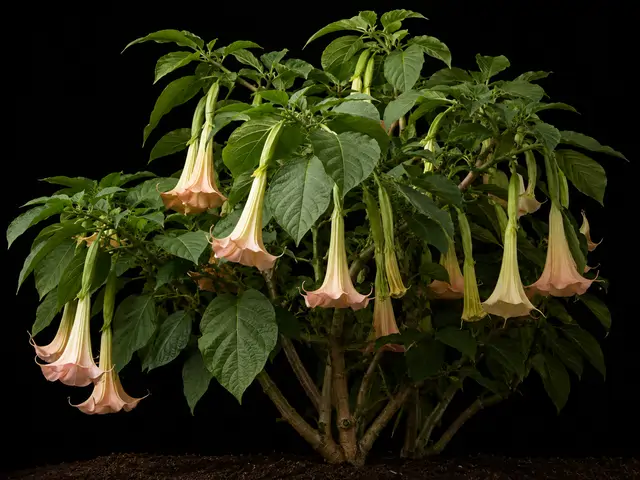
Angel's Trumpet
STRONGLY TOXIC - never eat, brew, or ingest any part, and never use it as a drug. Every part contains tropane alkaloids causing hallucinations, delirium, high fever, and death. It is especially dangerous because people (often teens) misuse it as a hallucinogen, frequently fatally - the toxic and 'active' doses are dangerously close. It is a dramatic ornamental with big hanging trumpet flowers. Keep it from children and pets; if ingestion is suspected, call poison control immediately.
Overview
A spectacular ornamental with huge hanging trumpet flowers - and a strongly toxic plant whose greatest danger is deliberate misuse as a hallucinogen, which is regularly fatal. Recognize it, keep it from children and pets, and never experiment with it.
Angel's trumpet (Brugmansia) is one of the most dramatic ornamental plants grown in warm gardens and patios - a large tropical shrub or small tree hung with enormous, pendulous, trumpet-shaped flowers in white, peach, yellow, and pink, often filling the evening air with powerful fragrance. It is also strongly toxic in every part, containing tropane alkaloids (scopolamine, atropine, and hyoscyamine) that cause severe poisoning: hallucinations, delirium, racing heart, high fever, and death.
What makes angel's trumpet especially dangerous isn't accidental nibbling so much as deliberate misuse: because of its alkaloids, people - often teenagers - sometimes brew or eat it seeking a hallucinogenic experience, and the results are frequently catastrophic. The gap between an 'active' dose and a lethal one is dangerously small, the effects are terrifying rather than pleasant, and poisonings routinely end in the hospital, in lasting harm, or in death. This identification and safety guide exists to help you recognize the plant (those unmistakable hanging trumpets), understand that its beauty hides real danger, keep it away from children and pets, and - crucially - understand and communicate that it must never be used as a drug. If any ingestion or misuse is suspected, treat it as an emergency.
At a glance
- Sun
- Full sun · Part sun · Part shade
- Water
- Medium
- Spacing
- 48–120 in (typ. 72)
- Mature height
- 60–240 in (typ. 120)
- Start by
- Cuttings
- Frost
- Tender
When to plant
No planting window on record for this zone.
Life stages
- Large-leaved shrub or small tree (identify & avoid) Apr, May, Jun, Jul, Aug (yearly)
-
Big soft leaves on a woody tropical shrub/small treeAngel's trumpet grows as a large, fast-growing tropical shrub or small tree (5-20 feet in warm climates, often container-grown and cut back elsewhere) with big, soft, oval leaves, sometimes with wavy or toothed edges. The whole plant has a rank smell when the foliage is bruised. It's grown as a dramatic ornamental and patio plant. Learn its bold-leaved form, and never handle it without gloves or let sap reach your mouth or eyes.
-
Keep it away from children, pets, and any experimentationBecause every part is strongly toxic, keep angel's trumpet where children and pets cannot reach it, and be aware that its greatest danger is deliberate misuse: it is sometimes brewed or eaten as a hallucinogen, which regularly causes severe poisoning, permanent harm, or death. Never allow it to be used this way, and talk with older children and teens about why this pretty plant is genuinely dangerous.
Large soft leaves on a big fast-growing tropical shrub/small treeRank smell from bruised foliageAny sign the plant is being brewed, chewed, or used as a drug - a serious danger -
Big soft leaves on a woody tropical shrub/small tree
- Huge HANGING trumpet flowers Jun, Jul, Aug, Sep, Oct (yearly)
-
Big pendulous trumpets - hanging DOWN (unlike upright Datura)The unmistakable feature is huge (6-20 inch) trumpet-shaped flowers that HANG DOWNWARD from the branches, in white, peach, yellow, pink, or orange, often powerfully fragrant in the evening. This pendulous, hanging habit distinguishes Brugmansia (angel's trumpet) from its relative Datura (jimsonweed), whose smaller trumpets point UP. The flowers and their nectar are toxic too - never taste the nectar or let children suck the flowers.
Huge trumpet flowers HANGING downward (the key ID vs upright Datura)Strong evening fragranceChildren or pets near the flowers or nectar - also toxic -
Big pendulous trumpets - hanging DOWN (unlike upright Datura)
- Cool season / overwintering (still toxic) Jan, Feb, Mar, Nov, Dec (yearly)
-
Frost-tender but toxic even when cut back or dormantAngel's trumpet is frost-tender; in cold climates it's cut back and overwintered indoors or in a garage, and where it freezes the top dies back. The plant remains toxic in every state, including cut stems, prunings, and any parts stored indoors over winter. Dispose of all prunings and any seed pods safely, away from children and pets, and never burn large amounts in an enclosed space.
Toxic even when cut back, dormant, or overwintered indoorsPrunings and stored stems still poisonousAny seed pods - keep away from children and pets -
Frost-tender but toxic even when cut back or dormant
Watch out for
Poisoning by Ingestion (deadly, esp. seeds) Disorder Highyear-round
The hazard is severe poisoning of people or animals: every part contains tropane alkaloids (scopolamine, atropine, hyoscyamine), with the SEEDS most concentrated. Poisoning causes hallucinations, delirium, dilated pupils, high fever, racing heartbeat, and death, and the alkaloid content varies unpredictably.
Watch for: Any ingestion of seeds, pods, leaves, or flowers (children are drawn to the spiny pods); symptoms can include agitation, hallucinations, flushed dry skin, dilated pupils, fever, and rapid heartbeat - a medical emergency.
Prevent: Recognize it and keep every part, especially the seeds, away from children, pets, and livestock; never eat, brew, or taste any part; remove plants before they seed; and keep it out of pasture, hay, and feed.
Treat: Suspected ingestion is an EMERGENCY - call poison control / emergency services (or a vet) immediately; do not wait for symptoms. Treatment is urgent supportive medical care; tell responders it is a tropane-alkaloid (Datura) plant.
Deliberate Misuse Hazard Disorder Highyear-round
The plant's most distinctive danger: because of its psychoactive alkaloids, people (often teenagers) sometimes brew or eat jimsonweed seeds or leaves seeking a hallucinogen. This regularly causes severe poisoning, terrifying delirium, permanent harm, and death, because the toxic and 'active' doses are dangerously close and unpredictable.
Watch for: Signs the plant or its seeds are being harvested, brewed, chewed, or discussed for recreational use, especially by teens; a poisoned person who may not admit what they took.
Prevent: Never use it as a drug and make clear to others (especially teens) that it must not be; remove plants from accessible areas before they seed; keep seeds and all parts out of reach; and have open conversations about the real danger.
Treat: Any suspected misuse is a medical emergency - call poison control / emergency services immediately and be honest about what was taken; prevention and open communication are the only reliable safeguards.
Varieties · 2
The dramatic tropical ornamental: a large shrub or small tree with big soft leaves and enormous, fragrant, DOWNWARD-hanging trumpet flowers in white, peach, yellow, or pink. Every part contains tropane alkaloids and is strongly toxic; deliberate misuse as a hallucinogen is frequently fatal. Identify and avoid; keep from children and pets and never experiment with it.
The close herbaceous relative in the nightshade family: smaller, often weedy plants with UPWARD-pointing trumpet flowers and spiny seed pods, carrying the same tropane alkaloids and the same deadly danger (including from misuse). The key ID contrast with Brugmansia is flower direction (Datura up, Brugmansia hanging down). Same lesson: identify and avoid. See the 'jimsonweed' entry.
Grow
How to recognize it: a big tropical shrub or small tree with large soft leaves and huge trumpet flowers that HANG DOWN - distinguishing it from its relative Datura (jimsonweed), whose smaller trumpets point up.
This guide is about recognizing angel's trumpet, not growing it. Its features: a large, fast-growing, somewhat woody shrub or small tree (5 to 20 feet in frost-free climates, often kept smaller in containers) with big, soft, oval leaves that may be wavy- or toothed-edged and smell rank when bruised; and, unmistakably, huge (6 to 20 inch) trumpet-shaped flowers that hang downward from the branches, in white, peach, yellow, pink, or orange, strongly fragrant in the evening.
The key identification - and a genuinely useful safety distinction - is between Brugmansia (angel's trumpet) and its close relative Datura (jimsonweed and moonflowers). Both are toxic tropane-alkaloid plants in the nightshade family, but Brugmansia is a larger, woody plant with pendulous, hanging flowers, while Datura is a smaller, herbaceous, often weedy plant with smaller trumpets that point upward and spiny seed pods. Knowing they're relatives is the safety point: both are dangerous, and neither should ever be eaten, brewed, or used as a drug. When you see a big tropical shrub dripping with enormous downward-hanging trumpets, recognize angel's trumpet and treat it as the potent poison it is, however beautiful.
Care
If you have one: keep it away from children, pets, and any experimentation, wear gloves when pruning, wash after handling, dispose of prunings and seed pods safely, and reconsider growing it at all where children or vulnerable people have access.
Where angel's trumpet is grown, the 'care' that matters most is managing its danger. Handle it only with gloves and long sleeves, keep the sap away from your eyes and mouth, and wash your hands and tools afterward - the alkaloids can be absorbed and even handling followed by hand-to-eye contact can cause effects. Keep the plant sited where children and pets can't reach the flowers, leaves, or nectar, and dispose of prunings, spent flowers, and any seed pods as ordinary green waste kept out of reach - never brewed, never composted where a child or animal might forage, and never burned in large amounts in an enclosed space.
The most important 'care' consideration, though, is about people. Because angel's trumpet is periodically misused as a hallucinogen - with devastating results - think hard about whether to grow it at all in a household or setting with teenagers, young children, or anyone who might experiment, and talk openly about why this beautiful plant is genuinely dangerous. There's no safe way to use it recreationally. If you decide to remove it, wear protection, bag all material safely, and dispose of it away from anyone who might ingest it. As with the other plants in this guide, the safest management is often simply knowledge and distance rather than cultivation.
Nutrition
Not food and not a safe medicine or drug - it is strongly toxic and never ingested. Its relevance is purely cautionary: a beautiful plant whose alkaloids make deliberate misuse frequently fatal, so knowing it is how you keep people and pets safe.
Angel's trumpet is not food, and it is emphatically not a safe medicine or recreational drug - every part is strongly toxic, and there is no safe amount to ingest. Its tropane alkaloids (scopolamine, atropine, hyoscyamine) are the same class of compounds used in tiny, carefully controlled doses in genuine pharmaceuticals, but the concentration in the raw plant is wildly variable and impossible to judge, which is exactly why home use is so dangerous: the line between an 'effect' and a fatal overdose is thin and unpredictable.
Its practical relevance is entirely cautionary, and specifically about deliberate misuse. Unlike many poisonous plants, whose danger is accidental, angel's trumpet is frequently poisoned on purpose by people - often young people - seeking a hallucinogenic experience, and the outcomes are grim: terrifying delirium rather than pleasure, dangerous fever and heart effects, hospitalization, lasting injury, and death. So the 'nutritional' lesson is stark: this plant offers nothing to eat, drink, or brew, its alkaloids are unforgiving, and the useful knowledge is to recognize it, keep it from children and pets, and understand - and help others understand - that it must never be used as a drug. If misuse or ingestion happens, it's an emergency.
History
A South American plant with deep roots in traditional ceremonial and medicinal use - now extinct in the wild and grown worldwide as a spectacular ornamental, and a recurring cause of serious modern poisonings.
Angel's trumpet comes from South America, where the various Brugmansia species have a long history in Indigenous ceremonial and medicinal traditions - used, always with great caution and specialized knowledge, in ritual and healing contexts precisely because of their powerful psychoactive alkaloids. Remarkably, Brugmansia is now extinct in the wild, surviving only in cultivation, a plant carried forward entirely by human hands for its extraordinary flowers.
In modern horticulture it spread worldwide as a spectacular tropical ornamental, prized for its huge, fragrant, hanging trumpets and grown in warm gardens and as a container patio plant in cooler climates. But its alkaloid chemistry has followed it everywhere, and in contemporary settings it recurs in medical and poison-control literature as a cause of serious accidental and deliberate poisonings - the latter especially among people attempting to use it as a hallucinogen. Its history captures a recurring theme in this guide: a plant that traditional cultures approached with deep respect and hard-won knowledge can become genuinely dangerous when its beauty is separated from an understanding of its power. Understanding angel's trumpet means holding both its allure and its serious risk in view at once.
Troubleshooting
Recognize the hanging trumpet flowers (vs upright Datura); keep it from children, pets, and any experimentation; never eat, brew, or use it as a drug; and treat any ingestion or misuse as an immediate emergency.
Is this angel's trumpet? Look for a big tropical shrub or small tree with large soft (often rank-smelling) leaves and huge trumpet flowers that HANG downward, in white, peach, yellow, or pink, fragrant in the evening. Its relative Datura (jimsonweed) is smaller and weedier with UPWARD-pointing trumpets and spiny pods - both are toxic. Someone ingested, brewed, or misused it: this is a medical emergency - call poison control / emergency services immediately; do not wait for symptoms, which can include hallucinations, agitation, dilated pupils, flushed dry skin, high fever, and racing heartbeat. Be honest with responders about what was taken. Isn't it safe to try as a hallucinogen? No - never; the toxic and 'active' doses are dangerously close, effects are frightening and can be fatal, and permanent harm is common. My child sucked a flower or my pet chewed a leaf: treat as an emergency and call poison control or a vet at once - flowers, nectar, and all parts are toxic. Can I handle it safely? Wear gloves, keep sap from your eyes and mouth, and wash after. Should I grow it around teens or kids? Reconsider - given the misuse risk, distance and open conversation are the safest approach.
Growing across climates
A frost-tender tropical (roughly zones 9-11 outdoors, grown as a container plant elsewhere), so you'll meet it as a landscape shrub in warm climates and a patio or greenhouse plant in cooler ones - toxic in every setting.
Angel's trumpet is a frost-tender tropical, and climate determines where you'll encounter it rather than changing its toxicity. Outdoors it's hardy roughly to zones 9-11, growing as a large evergreen or semi-evergreen shrub or small tree in the frost-free Sun Belt - California, the Gulf Coast, Florida, and similar warm regions - where it can reach tree size and bloom heavily. In cooler climates it's grown as a container patio plant that's cut back and overwintered indoors, in a garage, or in a greenhouse, or treated as a fast-growing seasonal specimen.
That means you'll meet angel's trumpet as a big landscape shrub in warm areas and as a striking potted plant on patios and in conservatories nearly everywhere else - and it is fully toxic in every setting and season, including when cut back, dormant, or stored indoors for winter. The climate takeaway for this guide is about awareness, not cultivation: wherever you see those unmistakable hanging trumpets - a warm-climate garden, a patio container, a greenhouse - recognize the plant, keep it away from children and pets, dispose of prunings safely, and understand that it must never be ingested or misused. Its beauty travels well across climates; so does its danger.
No grower tips for Angel's Trumpet yet — yours could be the first.
Sign in to share what works in your garden.