Add it to your home screen and it opens full screen — no browser bars, one tap away, and everything stays signed in. Free, nothing to download from an app store.
- Tap the Share button in your browser
- Scroll down and choose “Add to Home Screen”
- Open GrowSomeFood from your home screen
- Open your browser’s menu
- Choose “Add to Home screen” or “Install app”
- Open GrowSomeFood from your home screen
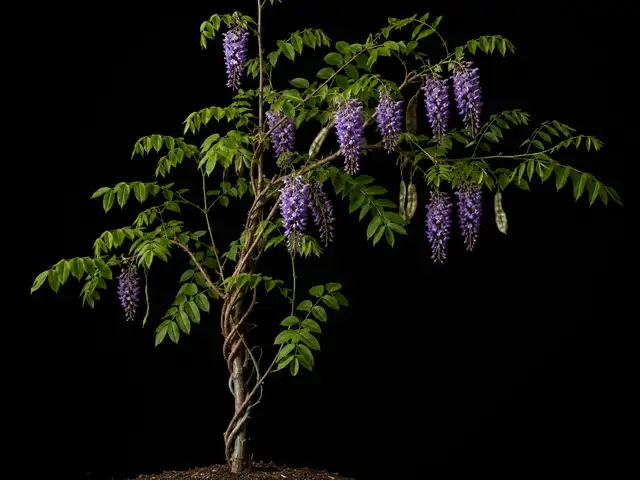
American Wisteria
American wisteria is grown for its flowers, not food, and like all wisterias its seeds and pods are toxic - eating even a couple of the bean-like seeds can cause stomach pain, vomiting, and diarrhea in people, and they poison pets and livestock, so keep the pods away from children and animals. It is far less aggressive than the invasive Asian wisterias, but it is still a vigorous woody vine: give it a strong structure, prune it yearly, and keep it off trees and buildings.
Overview
The native, well-behaved wisteria - the one to plant instead of the invasive Asian species. It gives the classic purple bloom on a far more restrained vine that supports native wildlife. Vigorous, so give it strong support; its seeds are toxic.
American wisteria (Wisteria frutescens) is the native, non-invasive wisteria of the southeastern and eastern US - and the answer to everyone who loves wisteria but shouldn't plant the invasive Asian kinds. It gives you the same romance - fragrant, dangling purple-to-lilac flower clusters on a woody twining vine - but on a plant that is far more restrained, stays much better where you put it, and belongs in the local ecosystem, supporting native pollinators and insects rather than smothering the woods.
It's the entry in this group that says 'grow THIS instead.' That said, it's honest to call it vigorous: it's still a real woody vine that wants a sturdy structure (an arbor, pergola, or heavy trellis) and a yearly prune, and like all wisterias its seeds and pods are toxic, so keep them from children and pets. Handled with that modest care, American wisteria is a wonderful, well-behaved native vine. This entry covers how to recognize it (and tell it from the invasive Asian species), and how to grow it responsibly.
At a glance
- Sun
- Full sun · Part sun · Part shade
- Water
- Medium
- Spacing
- 60–240 in (typ. 120)
- Mature height
- 96–360 in (typ. 240)
- Start by
- Direct sow · Transplant · Cuttings
- Frost
- Hardy
When to plant
No planting window on record for this zone.
Life stages
- Twining growth (grow with support) Apr, May, Jun, Jul, Aug, Sep, Oct (yearly)
-
Recognize it: compact native twining vine, smooth podsAmerican wisteria is a woody, deciduous twining vine with compound leaves of 9-15 leaflets. Compared with the Asian invasives it is more restrained: shorter, denser flower clusters that bloom AFTER the leaves, and smooth (hairless), bean-like seed pods rather than the Asians' velvety pods - a handy ID feature. It's the native, non-invasive wisteria - the one to plant.
-
Give it a strong structure and keep it off treesEven though it's well-behaved for a wisteria, it's still a strong woody vine - grow it on a sturdy arbor, pergola, or heavy trellis (not a small tree, shrub, or house gutter it could overwhelm), and steer it away from valuable trees. Direct new growth onto the support and remove wayward runners so it stays where you want it.
Twining stems that need directing onto strong supportSmooth (hairless) seed pods (vs the Asian species' velvety pods)Runners wandering toward trees or structures to redirect or remove -
Recognize it: compact native twining vine, smooth pods
- Late-spring to summer purple bloom May, Jun, Jul (yearly)
-
Short, dense purple-lilac racemes after the leavesAmerican wisteria blooms after leaf-out (later than the Asian species), with shorter, denser, rounded racemes of fragrant purple-to-lilac pea flowers, often 4-6 inches long, and it frequently reblooms lightly through summer. Because it flowers on new growth, it's easy to keep tidy with pruning while still enjoying the classic wisteria display.
-
Prune after bloom to shape and encourage rebloomPrune after the main flush to shape the vine, control size, and encourage repeat bloom. Cutting back long shoots keeps it dense and floriferous and prevents it from overreaching - part of what makes the native easy to keep in bounds compared with the Asian invasives.
Short, dense, fragrant purple-lilac racemes after the leavesLight rebloom through summerNew growth to prune for shape and repeat flowering -
Short, dense purple-lilac racemes after the leaves
- Bare stems & smooth pods Jan, Feb, Mar, Oct, Nov, Dec (yearly)
-
Smooth seed pods and bare woody stems in winterAfter flowering it sets smooth (hairless), flattened, bean-like pods that persist and split to release hard, toxic seeds - the smooth pods help distinguish it from the velvety-podded Asian species. In winter the bare stems make it easy to see the structure and do major pruning.
-
Dormant-prune for structure; keep pods from children/petsWinter is a good time for structural pruning - remove excess stems and shape the framework. Remove or dispose of the toxic pods where children or pets could reach them. A yearly prune keeps even this native vine well-mannered and productive.
Smooth bean-like pods releasing toxic seedsBare woody framework to structure-prunePods within reach of children or pets to remove -
Smooth seed pods and bare woody stems in winter
Watch out for
Toxic Seeds & Pods Disorder MediumJan, Aug, Sep, Oct, Nov, Dec
A direct hazard to people and animals: all wisterias have toxic seeds and pods - eating even a couple of the bean-like seeds can cause severe stomach pain, vomiting, and diarrhea in people, and they poison pets and livestock.
Watch for: Children, pets, or livestock near the velvety bean-like pods and hard seeds, which persist into winter and split open to scatter seeds.
Prevent: Keep pods and seeds away from children and animals; bag and dispose of pods; don't let seeds spread.
Treat: For any ingestion, contact poison control or a veterinarian; remove pods to reduce the hazard.
Vigorous Growth (needs support & pruning) Disorder LowApr, May, Jun, Jul, Aug, Sep, Oct
Not an invasion, but a management note: even the native wisteria is a strong woody vine that can overwhelm a flimsy structure, a small tree, or a house gutter if left unpruned, and its weight builds over the years.
Watch for: Heavy stems bending or breaking a weak support, runners heading into trees or gutters, and thickening woody trunks over time.
Prevent: Grow it on a strong permanent structure (arbor, pergola, heavy trellis), keep it off trees and buildings, and prune yearly.
Treat: Prune after bloom and in winter to control size, redirect or remove wayward runners, and reinforce or upgrade weak supports.
Varieties · 3
The native, well-behaved wisteria: a woody twining vine with short, dense purple-lilac racemes that bloom after the leaves (often reblooming) and smooth seed pods, supporting native pollinators and staying far more contained than the Asian invasives. Vigorous but manageable with strong support and yearly pruning - the wisteria to plant. Seeds are toxic.
Named selections of American wisteria bred for more compact growth and heavier, earlier, or repeat bloom make the native even easier to grow in gardens. 'Amethyst Falls' is a widely available example - a manageable, floriferous native vine for arbors and trellises. Still vigorous, so give strong support and prune yearly.
A closely related native wisteria (sometimes treated as a variety of American wisteria) native to the south-central US, valued for slightly longer racemes and good cold-hardiness. Another well-behaved native option to plant instead of the invasive Asian wisterias.
Grow
How to recognize and grow it: a native twining vine with short, dense purple racemes that bloom after the leaves and smooth (not velvety) pods; grow it on strong support and prune yearly to keep it tidy.
American wisteria is a woody, deciduous twining vine with compound leaves of usually 9-15 leaflets. The features that set it apart from the invasive Asian wisterias - and confirm you have the good one - are that it blooms after the leaves emerge (later than the Asians), with shorter, denser, rounded racemes (often 4-6 inches) of fragrant purple-to-lilac flowers, and it sets smooth, hairless seed pods rather than the velvety pods of Chinese and Japanese wisteria. It often reblooms lightly through summer.
To grow it well, give it full sun to part shade, moist but well-drained soil, and - importantly - a strong permanent structure to climb: a sturdy arbor, pergola, or heavy trellis, not a small tree, shrub, or house gutter it could overwhelm. Direct new growth onto the support, keep it off valuable trees, and prune yearly (after bloom and/or in winter) to control size and encourage flowering on new growth. It's much easier to keep in bounds than the Asian species, but it rewards a little attention. Grown this way, it's a well-mannered, long-lived native vine - and exactly what to plant when you want wisteria without the invasion.
Propagation & seed saving
How it spreads - and why it stays manageable: mainly by seed from smooth pods, with some rooting and suckering; far less aggressive than the Asian wisterias, but still direct and prune it so it stays where you want it.
American wisteria spreads mainly by seed - its smooth pods split to release hard (toxic) seeds - and it can be propagated by softwood cuttings and layering, which is how named selections are produced. It does root where low stems rest on soil and can send up some suckers, but it is far less aggressive than Chinese or Japanese wisteria: it doesn't run and blanket the ground and canopy the way the Asian species do, and it stays much closer to where it's planted.
That relative restraint is exactly why it's the recommended native. Still, it's a vigorous vine, so a bit of management keeps it ideal: direct its growth onto the support, remove wayward runners, and prune yearly. If you'd rather it not self-sow at all, you can remove the pods after bloom. Grown on a strong structure with a yearly prune, it stays a tidy, contained feature - the opposite of the escape-and-smother behavior that makes the Asian wisterias a problem.
Care
Real care (you can grow this one): strong support, full sun to part shade, moist well-drained soil, and a yearly prune after bloom and/or in winter to shape it and keep it flowering; keep the toxic pods from children and pets.
Unlike the invasive wisterias in this group, American wisteria is a plant you can actually grow - it just needs a little structure and pruning. Give it a strong permanent support (arbor, pergola, heavy trellis) from the start, site it in full sun to part shade in moist, well-drained soil, and water it while establishing. As a legume it fixes its own nitrogen, so it needs little feeding; too much nitrogen actually favors leaves over flowers.
The key ongoing task is pruning. Prune after the main bloom to shape it and encourage rebloom, and do structural pruning in winter when the bare framework is easy to see - cutting back long shoots keeps it dense, floriferous, and in bounds, and prevents it from overreaching into trees or structures. Direct new growth onto the support and remove wayward runners. Keep the toxic seed pods away from children and pets (remove them if you prefer no self-sowing), and wear gloves when handling heavy stems. That's really all it takes: with a sturdy structure and a yearly prune, American wisteria is an easy, long-lived, well-behaved native vine.
Nutrition
Not a food - like all wisterias its seeds and pods are toxic, and it's grown for its flowers. Ecologically, though, its value is positive: as a native it supports native pollinators and insects and coexists with local ecosystems.
American wisteria is not food - like all wisterias, its seeds and pods are toxic (they cause stomach pain, vomiting, and diarrhea if eaten, and poison pets and livestock), so keep them from children and animals. It's grown purely as an ornamental flowering vine.
But here the ecological story flips positive. As a native plant, American wisteria works with the local ecosystem rather than against it: its flowers offer nectar to native bees and other pollinators, it serves as a larval host for certain native butterflies and moths (including some skippers), and as a legume it fixes nitrogen. Crucially, it does not girdle trees, smother forests, or escape into natural areas the way the invasive Asian wisterias do. So choosing American wisteria over Chinese or Japanese wisteria isn't just harm-avoidance - it's a genuine positive for local wildlife. The meaningful 'nutrition' story here is that this is the wisteria that adds to the food web instead of destroying it, which is exactly why it's the one to plant.
History
A true native of southeastern and eastern US wetlands, streambanks, and woodland edges, American wisteria has long grown wild here and is increasingly grown as the responsible native alternative to the invasive Asian wisterias.
American wisteria is a true native of the southeastern and eastern United States, growing wild along streambanks, wet woodland edges, floodplains, and swampy ground from Virginia and the mid-Atlantic through the Deep South and into parts of the lower Midwest and Texas. It has been part of these landscapes all along, quietly climbing in bottomland woods long before the showier Asian wisterias arrived in gardens.
For much of the 20th century it was overshadowed in the nursery trade by Chinese and Japanese wisteria, whose longer, earlier, more dramatic flower displays made them the fashionable choice - the same species that then escaped to become invasive. As awareness of that invasion has grown, American wisteria has enjoyed a well-deserved revival as the responsible native alternative, and improved selections (such as more compact, heavier-blooming named cultivars) have made it easier than ever to grow. Its story is the hopeful flip side of this whole group: for a beloved plant that turned out to be invasive, there was a fine native waiting all along - proof that 'grow natives instead' rarely means giving up the beauty you wanted.
Troubleshooting
Confirm it's the native (blooms after the leaves, short dense racemes, smooth pods), grow it on strong support, prune yearly, keep toxic pods from children/pets - and don't confuse it with the invasive Asian wisterias.
Is this the native American wisteria? Look for a woody twining vine with 9-15 leaflets; short, dense, rounded purple-lilac racemes (4-6 in) that bloom after the leaves in late spring to summer, often reblooming; and smooth (hairless) seed pods. The Asian invasives bloom earlier (mostly before or with the leaves), have longer racemes, and have velvety pods - if in doubt, the smooth pods and after-leaf bloom point to the native. Is it invasive? No - it's the native, non-invasive wisteria and the recommended choice; it's just vigorous, so give it strong support and prune it. Why won't it bloom? Wisterias can be slow to flower when young or over-fed with nitrogen; be patient, avoid high-nitrogen feeding, give it full sun, and prune to encourage flowering wood. It's getting too big: prune after bloom and in winter, direct growth onto the structure, and keep it off trees. Are the seeds dangerous? Yes - like all wisterias, the seeds and pods are toxic; keep them from children and pets. What if I have Asian wisteria instead? See the Chinese and Japanese wisteria entries - those should be removed and replaced with this native.
Growing across climates
Native and well-adapted across the southeastern and eastern US (roughly zones 5-9), at home in moist soils, streambanks, and woodland edges; hardy and adaptable, it's the climate-appropriate wisteria for this region.
American wisteria is native and well-adapted across the southeastern and eastern US, roughly zones 5-9, where it grows wild in moist soils, streambanks, floodplains, and wet woodland edges. That native adaptation is part of its appeal: it's suited to the region's climate and rainfall, tolerant of the wet feet the Asian species dislike, and hardy through the range's winters. It grows in full sun to part shade, blooming best with more sun.
Because it's a regional native, it's the climate-appropriate wisteria to plant across much of the Southeast and East - it fits the local conditions and the local ecosystem, rather than exploiting them. Gardeners farther afield can grow it too within its hardiness range. Wherever you plant it, the guidance is the same and refreshingly simple: give it a strong support, prune it yearly to keep it tidy and floriferous, keep the toxic pods from children and pets - and enjoy having the wisteria you wanted in a plant that belongs here and behaves itself. This is the wisteria to grow instead of the invasive Asian species.
No grower tips for American Wisteria yet — yours could be the first.
Sign in to share what works in your garden.