Add it to your home screen and it opens full screen — no browser bars, one tap away, and everything stays signed in. Free, nothing to download from an app store.
- Tap the Share button in your browser
- Scroll down and choose “Add to Home Screen”
- Open GrowSomeFood from your home screen
- Open your browser’s menu
- Choose “Add to Home screen” or “Install app”
- Open GrowSomeFood from your home screen
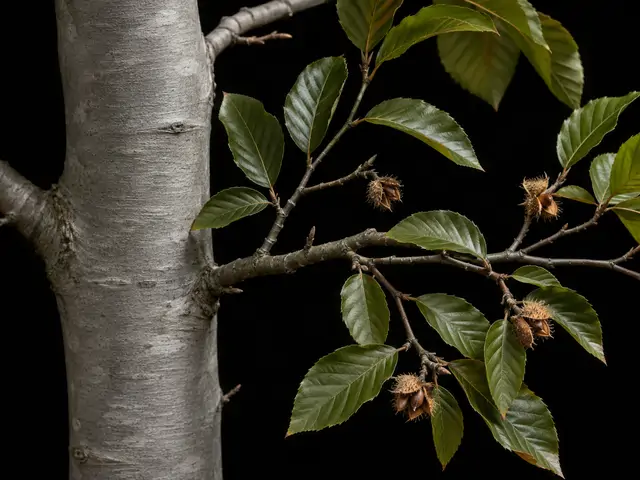
American Beech
Ripe beechnuts are a safe, sweet, edible nut and a common tree-nut allergen. The one caution: raw beechnuts contain small amounts of a bitter compound (fagin) and tannins, so eat them only in moderation raw - roasting improves flavor and reduces the issue, and beechnuts were traditionally roasted or made into oil. The nuts are small and fiddly to shell but genuinely good. The tree's dense shade and shallow roots (little grows beneath it) are practical considerations, not hazards.
Overview
A stately, long-lived climax-forest tree with smooth silvery-gray bark and papery tan leaves that cling all winter - producing small, sweet beechnuts in periodic mast years and casting the deep shade that defines a mature eastern beech woods.
American beech (Fagus grandifolia) is one of the most beautiful and characterful trees of the eastern forest - a large (50-70 foot), long-lived hardwood famous for its smooth, silvery-gray bark (the classic 'carve-your-initials' bark, though the tree would rather you didn't) and for its habit of holding pale, papery tan leaves through winter, a trait called marcescence that lights up the bare woods and rustles in the wind. Its spring foliage emerges a delicate pleated green, and it turns golden-bronze in fall.
It's a true climax-forest tree: shade-tolerant, slow-growing, and long-lived, casting dense shade under which little grows, and forming the grand beech-maple forests of the region. It bears small, sweet, three-sided beechnuts - a genuinely good wild nut (best roasted) and a keystone wildlife food - but only in periodic mast years, and the tree takes decades to begin. Beech is intolerant of drought, compaction, salt, and root disturbance, so it needs a cool, moist, undisturbed site. Given one, it becomes a magnificent, silver-barked heirloom that anchors a woodland for centuries - and sadly, one now facing serious new diseases across its range.
At a glance
- Sun
- Full sun · Part sun · Part shade
- Water
- Medium
- Spacing
- 360–720 in (typ. 540)
- Mature height
- 600–960 in (typ. 780)
- Start by
- Direct sow · Transplant
- Frost
- Hardy
- Germination
- 30–120 days (typ. 60) @ 55–75 °F (typ. 65)
When to plant
Zone 7a typical frost: last Apr 10 · first Oct 25
Life stages
- Years 1-4 - slow young tree day 0–1460 from transplant
-
Water while establishing, and keep the roots coolevery 6 dWater a young American beech deeply and regularly through its first few years, and keep the shallow roots cool and moist with mulch. Beech is a slow grower that resents disturbance, drought, and compaction - plant it small (or from a nut in place) into deep, moist, well-drained, slightly acidic soil.
-
Mulch wide over the shallow rootsA broad mulch ring protects beech's shallow, sensitive roots from mowers, heat, and compaction and holds moisture; keep it back from the trunk. Beech dislikes root disturbance, so avoid digging near it once planted.
-
Site it with room and shade tolerance in mindAmerican beech becomes a large (50-70 foot), long-lived tree with dense shade, smooth silvery bark, and shallow spreading roots under which little grows. It tolerates shade well (a true climax-forest tree) but is intolerant of drought, salt, compaction, and pollution - give it a cool, moist, undisturbed, roomy site.
Slow early growth (normal for this long-lived climax tree)Root disturbance, compaction, or drought stress (beech is very sensitive)Suckers forming a thicket from the rootsDeer browsing young saplings -
Water while establishing, and keep the roots coolevery 6 d
- Spring bloom & pollination Apr, May (yearly)
-
Small flowers as the leaves emergeAs the leaves unfold in spring, beech opens small flowers - round clusters of male flowers and tiny female flowers - that are wind-pollinated. A single tree can bear, but two beeches nearby improve nut set. The new leaves emerge a delicate pleated bright green.
-
A second beech improves the cropBeech is wind-pollinated, and a second tree nearby improves cross-pollination and nut set, though large old beeches often bear well alone in mast years.
Late frost damaging the tender new leaves in cold springsLight nut set on a lone tree in most yearsThe delicate pleated new spring foliage -
Small flowers as the leaves emerge
- Summer nut development Jun, Jul, Aug, Sep (yearly)
-
Water in drought (beech is drought-sensitive)Small spiny husks develop through summer, each holding two little three-sided beechnuts. Beech is notably drought-sensitive, so water in dry spells to keep it healthy and to help any nut crop fill. Expect strong mast bearing - big crops only every few years.
-
Watch the spiny husks developThe soft-spiny four-parted husks (burs) swell through summer, then dry and split open in fall to drop the small triangular nuts. Little care is needed - beech is a low-maintenance tree once it's in a suitable cool, moist site.
Soft-spiny husks swelling (the beechnuts developing inside two per bur)Strong mast bearing (heavy crops only every 2-8 years)Many empty or partly filled nuts, especially in off yearsDrought stress in dry summers -
Water in drought (beech is drought-sensitive)
- Nut harvest (fall) Sep, Oct, Nov (yearly)
-
Gather beechnuts as the husks split (in mast years)every 3 dIn fall, the spiny husks dry and split open into four parts, dropping the small, three-sided, tan beechnuts. Gather them promptly off the ground before wildlife takes them; peel any clinging husks (they're only softly prickly). Expect real crops only in periodic mast years - and expect many empty nuts, so do a float test or squeeze-test to find the filled ones.
-
Race the wildlife for the cropBeechnuts are a top wildlife food - squirrels, chipmunks, turkeys, blue jays, deer, and bears all seek them - so they vanish fast. Gather daily in the drop window in a good year, and accept that you're competing with hungry wildlife for a prized nut.
Wildlife stripping the crop fast (beechnuts are prized)Many empty or hollow nuts (common - test for filled ones)Crops only in mast years (little to harvest between)Nuts small and fiddly to shell -
Gather beechnuts as the husks split (in mast years)every 3 d
- Fall color, marcescent leaves & winter Jan, Feb, Mar, Oct, Nov, Dec (yearly)
-
Golden-bronze fall color, then marcescent winter leavesBeech turns a lovely golden-bronze to coppery-tan in fall, and then - especially on young trees and lower branches - holds its papery, pale-tan dead leaves through much of winter (a trait called marcescence), rustling in the wind until spring. Combined with the smooth silvery-gray bark, it's beautiful in the winter woods.
-
Prune sparingly in late winterAmerican beech needs little pruning and its thin, smooth bark is easily damaged, so prune sparingly in the dormant season - remove only dead or damaged wood, and avoid wounding the trunk (wounds mar the bark permanently and can invite disease). Remove root suckers if you want a single tree.
Marcescent tan leaves clinging through winter (normal and attractive, especially on young trees)Smooth silvery-gray bark (easily and permanently scarred - protect it)Root suckers forming a thicketBeech bark disease and beech leaf disease in affected regions (see troubleshooting) -
Golden-bronze fall color, then marcescent winter leaves
Harvest
- Style
- Repeated picking
- By weight
- 16–640 oz (typ. 160)
- First production
- 10–40 yrs (typ. 25)
- Spiny husks (burs) dried and split open in fall, dropping the small three-sided nuts
- Nuts tan and firm; filled nuts feel solid, while many empties are flat and hollow
- Real crops only in periodic mast years (heavy every few years, little between)
- Roasting improves flavor and reduces the bitter compound in raw nuts
Watch out for
Beech Leaf Disease Disease HighMay, Jun, Jul, Aug, Sep
A serious, rapidly spreading new disease of beech (associated with a microscopic nematode) first found in the Great Lakes region and now moving through the eastern U.S. It causes dark bands and striping between leaf veins, thickened leathery and curled leaves, canopy thinning, reduced nut production, and - over just a few years - the death of trees, including young ones. It is one of the gravest current threats to American beech.
Watch for: Dark green-to-black interveinal bands and stripes on the leaves (seen from below), thickened, leathery, crinkled, or curled leaves, reduced leaf and bud numbers, canopy thinning, and progressive decline over a few seasons.
Prevent: There's no proven preventive for landscape trees yet; keep beeches vigorous and unstressed, avoid moving beech material from infested areas, and report and monitor symptoms. Research into treatments is ongoing.
Treat: No reliable cure is established - some experimental treatments (certain systemic products) are being tested; consult an arborist or extension office in affected regions and follow the latest local guidance. Remove severely declining trees as advised.
Beech Bark Disease Disease HighMay, Jun, Jul, Aug, Sep
A long-established, destructive disease complex in which an introduced woolly beech scale insect feeds on the bark and opens the way for Neonectria fungi, which create cankers that crack, weep, and girdle the bark - deforming and killing beeches, especially the larger trees, across the Northeast and beyond.
Watch for: White, woolly scale insects on the bark, followed by oozing/weeping spots, cracked and cankered bark, dead patches, and crown dieback; snapped trunks ('beech snap') on badly cankered trees.
Prevent: Keep trees vigorous; where feasible on small or valuable trees, control the woolly beech scale (horticultural oil) before the fungus gets established. Some trees show natural resistance and are worth preserving.
Treat: There's no full cure for infected mature trees - manage the scale, keep the tree vigorous, remove severely cankered/hazardous wood, and consult a professional; retain naturally resistant, scale-free trees as a genetic resource.
Bark Scarring (Thin Smooth Bark) Disorder Lowyear-round
Not a pest, but a real vulnerability: beech's thin, smooth bark is easily and permanently damaged by mowers, string trimmers, carving, and sunscald, and wounds don't heal over cleanly and can invite disease.
Watch for: Scars, gouges, carved initials, mower and trimmer wounds, and sunscald cracks on the smooth trunk that remain visible for the life of the tree and may weep or become entry points for decay.
Prevent: Protect the trunk with a wide mulch ring (no mowing or trimming near the bark), avoid carving or wounding it, and shade thin young bark from sudden sun exposure to prevent sunscald.
Treat: There's no way to erase bark scars; keep wounds clean and the tree vigorous so it can compartmentalize damage, and avoid further injury. Prevention is everything with beech bark.
Good & bad neighbors
Varieties · 4
The wild native: a large (50-70 foot), long-lived climax-forest tree with smooth silvery-gray bark, papery marcescent winter leaves, golden-bronze fall color, and small sweet beechnuts in mast years. Beautiful and keystone, but slow, disturbance-sensitive, and now threatened by emerging diseases.
The Old World beech widely planted as an ornamental, with many dramatic cultivars (copper/purple 'Purpurea,' weeping 'Pendula,' columnar 'Dawyck,' fern-leaf); smoother-growing and more urban-tolerant than American beech, and grown for form and foliage rather than nuts.
A striking European beech cultivar with deep purple-to-copper foliage all season - one of the most dramatic specimen trees for a large lawn, grown entirely for its rich leaf color; a landscape (not a nut) tree.
A spectacular weeping European beech whose long branches cascade to the ground, forming a living green (or purple) tent - a sculptural specimen tree for a large open space, grown purely as a dramatic ornamental.
Grow
Cool, moist, well-drained, slightly acidic soil and room in zones 4-9; shade-tolerant but drought-, salt-, and compaction-intolerant - plant it small (it hates root disturbance), keep it cool and undisturbed, and be patient with its slow growth.
American beech wants a cool, moist, deep, well-drained, slightly acidic soil and does best in a sheltered, undisturbed spot - it's a tree of the climax forest, remarkably shade-tolerant (it can grow up under other trees), but intolerant of drought, heat extremes, salt, soil compaction, pollution, and root disturbance. It's hardy across zones 4-9 but is fundamentally a cool-woods tree. Because its shallow roots resent disturbance, plant it small (or from a nut in place) and avoid digging or compacting the soil near it afterward.
Give it room, time, and cool roots. It becomes a large, dense-shading, long-lived tree, so site it well clear of buildings, and mulch widely to keep the shallow roots cool and moist. Be patient: beech grows slowly and won't bear nuts for many years. Two more notes: it suckers from the roots and can form a thicket (thin the suckers for a single tree, or let it colonize), and its thin, smooth bark is easily and permanently scarred, so protect the trunk from mowers, string trimmers, and carving. Given a cool, moist, roomy, undisturbed site, beech is a magnificent, low-care native - just not a tree for hot, dry, paved, or disturbed ground.
Care
Low-care in a suitable cool, moist site - water in drought, protect the thin bark and shallow roots, prune sparingly in late winter, and watch for the emerging beech bark and beech leaf diseases.
In a suitable cool, moist site, American beech needs little care. Water it in drought (it's notably drought-sensitive, and dry, hot spells stress it), keep a wide mulch ring over the shallow roots, and protect it from compaction and disturbance. Prune sparingly, in the dormant season, removing only dead or damaged wood - beech needs little pruning, and its thin, smooth bark is easily and permanently damaged by wounds, which also invite disease, so avoid unnecessary cuts and protect the trunk from mowers and trimmers.
The serious modern concern is disease. Beech bark disease (a scale insect plus a fungus) has killed and deformed beeches across the Northeast for decades, and a newer, alarming beech leaf disease (linked to a nematode) is now spreading rapidly through the East, striping and killing leaves and, over a few years, killing trees - including young ones. There's no easy home cure for either; the best you can do is keep the tree vigorous and unstressed, avoid wounding it, and consult an arborist or extension office in affected regions, where treatments are being developed. Manage root suckers if you want a single tree. Otherwise, beech asks mainly for a good site and to be left undisturbed.
Harvest
Gather the small, sweet beechnuts in fall as the spiny husks split - but only in mast years, and expect many empties; roast them for the best flavor, competing with eager wildlife for the crop.
Harvesting beechnuts is an occasional, patient pleasure. Beech bears real crops only in periodic mast years (heavy every few years, with little between), and even then many nuts are empty - so the harvest is unpredictable. In a good fall, the soft-spiny husks dry and split into four parts, dropping the small, three-sided, tan beechnuts. Gather them promptly off the ground before wildlife clears them, peel any clinging husks (only softly prickly), and test the nuts - filled ones feel solid and sink, while the many empties are flat and hollow.
The nuts are small and fiddly to shell, but the sweet, triangular kernel is genuinely good. They can be eaten raw in moderation, but roasting is far better: it deepens the sweet flavor and reduces the bitter compound (fagin) and tannins in raw nuts. Traditionally, beechnuts were roasted, ground into meal, or pressed for a fine cooking oil. You'll be racing wildlife - squirrels, chipmunks, turkeys, jays, deer, and bears all prize beechnuts - so a good harvest means gathering daily in a mast year and accepting a share for the animals. It's not a reliable annual crop, but a beechnut foray in a mast autumn is a real woodland reward.
Storage
Filled in-shell nuts keep a few months cool and dry; the oil-rich kernels go rancid, so refrigerate or freeze them - and roast them for the best flavor and keeping quality.
Beechnuts store like other oil-rich nuts, but they're small and often scarce, so most people simply eat them fresh-roasted in a good year. For keeping, cull to the filled nuts (discard the many empties and any floaters), and store them in-shell, cool and dry, for a few months; refrigeration extends that. Because the kernels are high in oil, once shelled they turn rancid at room temperature, so store shelled beechnuts in the refrigerator or freezer to keep them fresh.
Roasting is both a flavor and a storage step: roasted beechnuts taste better, have less of the raw nut's bitter fagin, and keep somewhat better than raw ones. Traditionally, surplus beechnuts were roasted and ground into a meal, or pressed for a clear, fine beechnut oil that stores like other nut oils. Given the small size, the fiddly shelling, and the unreliable mast-year supply, though, beechnuts are usually more a seasonal treat to enjoy fresh than a nut to lay up in quantity - the bigger 'harvest' is really the wildlife feast the tree provides.
Propagation & seed saving
Grow from a filled nut planted where the tree will stay (needs stratification; beech hates transplanting) or from root suckers; seedlings are slow, and beech is rarely grafted for home use.
American beech is best grown from a filled nut, planted in fall where the tree will stay. The nut needs winter cold stratification and germinates in spring, but beech strongly resents transplanting, so direct-sowing (or moving only a very small seedling) gives the best result; protect planted nuts from squirrels with a screen. The catch is that most nuts, especially in off years, are empty - so collect from a mast year and test for filled ones. Seedlings grow slowly, as befits a long-lived climax tree.
Beech also spreads naturally by root suckers, sending up clones around a mature tree that form the characteristic beech thickets; you can dig and move a rooted young sucker in early spring, though these too establish slowly and dislike disturbance. Named ornamental forms - like the European beech's weeping and copper cultivars - are grafted, but American beech is rarely grafted for the home garden. For most people, planting a filled nut in place (and being patient) or protecting a self-sown seedling or sucker is the realistic route. However you start it, beech is a slow, long-term project - a tree planted firmly for future generations, and best where its diseases can be watched for.
Nutrition
A sweet, nutritious, oil-rich nut - and one of the most important wildlife foods of the eastern forest, feeding everything from chipmunks to black bears; the tree is a keystone of mature woodlands.
Beechnuts are a sweet, nutritious, oil-rich nut, high in healthy fats and protein with useful fiber and minerals - historically important enough that people roasted them, ground them into meal, and pressed them for a fine cooking oil. Their main drawbacks for people are small size, fiddly shelling, the many empty nuts, and the mild bitterness of raw nuts (improved by roasting) - so they're more a seasonal treat than a staple today.
For wildlife, though, beech is a heavyweight. Beechnuts (or 'beech mast') are one of the most important wild foods of the eastern forest, a crucial high-fat autumn food for black bears fattening for winter, wild turkeys, ruffed grouse, wood ducks, blue jays, squirrels, chipmunks, deer, and many more - and mast years drive the reproduction and survival of much of the forest's wildlife. The tree is a keystone of the mature beech-maple forest, its cavities sheltering wildlife, its foliage hosting native caterpillars, and its shade shaping whole woodland communities. So while beech gives people a modest, occasional nut, it feeds the forest richly - which is why the diseases now threatening it are such a serious ecological concern.
History
A tree of legend and long use - Indigenous peoples and settlers ate roasted beechnuts and pressed them for oil, the smooth bark famously bore carved names for centuries, and beech mast fattened forest wildlife and free-range hogs alike.
American beech has a long place in the life of the eastern woods. Its sweet beechnuts were gathered and roasted by Indigenous peoples and later settlers, ground into meal, and pressed for a clear cooking oil, while beech mast fattened wildlife and, in settlement days, free-ranging hogs turned loose in the forest to feed on it (a practice called pannage). The tree's fine, hard wood was used for flooring, furniture, tool handles, and cooperage.
The beech's most famous cultural trait, though, is its smooth bark - an irresistible canvas that has borne carved initials, names, dates, and messages for centuries (a frontier tale even credits a Tennessee beech with Daniel Boone's carved boast of killing a bear). Those carvings, and the tree's grand silvery presence, made individual old beeches landmarks and legends in many communities. Today the beech's story has taken a darker turn: beech bark disease has reshaped Northeastern forests for decades, and the rapidly spreading beech leaf disease now threatens the species across its range - lending new urgency to appreciating, and trying to save, one of the most beloved trees of the eastern forest.
Troubleshooting
The gravest issues are the emerging beech bark and beech leaf diseases; otherwise, expect slow growth, unreliable mast-year nut crops with many empties, dense root suckers, and easily scarred bark.
Dark striping between leaf veins, curled/leathery leaves, thinning canopy, and decline (especially recently): likely beech leaf disease, a serious, fast-spreading new disease (linked to a nematode) killing beeches across the East, including young trees - there's no easy home cure; keep the tree vigorous, avoid stress, and consult an arborist or extension office, as treatments are being developed. Cankered, cracked, weeping bark with white woolly scale, and dieback: beech bark disease (a scale insect plus a fungus) - long a killer in the Northeast; manage the scale and keep the tree vigorous, and consult a professional. The tree grows very slowly: normal - beech is a slow, long-lived climax tree. Few or no nuts, or lots of empty nuts: beech bears real crops only in periodic mast years, and many nuts are naturally empty - be patient and test for filled ones. Suckers and a thicket forming: beech suckers from the roots; thin them for a single tree or let it colonize. Scarred, marred bark: beech's thin, smooth bark scars permanently - protect the trunk from mowers, trimmers, and carving. Tan leaves clinging all winter: marcescence - normal, and one of beech's charms.
Growing across climates
A cool-woods tree of the eastern U.S. (zones 4-9), best in moist, sheltered, undisturbed sites; intolerant of drought, heat extremes, salt, and compaction, and now broadly threatened by emerging diseases across its range.
American beech is native across the eastern United States, hardy in zones 4-9, but it's fundamentally a cool, moist, forest-interior tree rather than a tough urban one. Zones 5-7 (its heartland): the moist, deep-soiled forests of the Northeast, Appalachians, and Great Lakes region grow the grandest beeches, forming the classic beech-maple climax forest. Zones 8-9 (the South): beech grows in cool, moist ravines, coves, and bottomlands well into the South (it reaches the Gulf on shaded, moist sites), but not on hot, dry, or exposed ground. Zone 4 and the cold north: hardy, near its northern limit. Its real limits are site conditions rather than raw cold or heat: beech is intolerant of drought, reflected heat, salt, soil compaction, pollution, and root disturbance, so it fails as a street or tough-site tree and needs a cool, moist, sheltered, undisturbed spot. And increasingly, its greatest threat is not climate but disease - beech bark disease and the fast-spreading beech leaf disease now endanger the species across much of its range, a sobering reason to site new trees well and watch them closely.
Cook it
All 3 recipes →No grower tips for American Beech yet — yours could be the first.
Sign in to share what works in your garden.