Add it to your home screen and it opens full screen — no browser bars, one tap away, and everything stays signed in. Free, nothing to download from an app store.
- Tap the Share button in your browser
- Scroll down and choose “Add to Home Screen”
- Open GrowSomeFood from your home screen
- Open your browser’s menu
- Choose “Add to Home screen” or “Install app”
- Open GrowSomeFood from your home screen
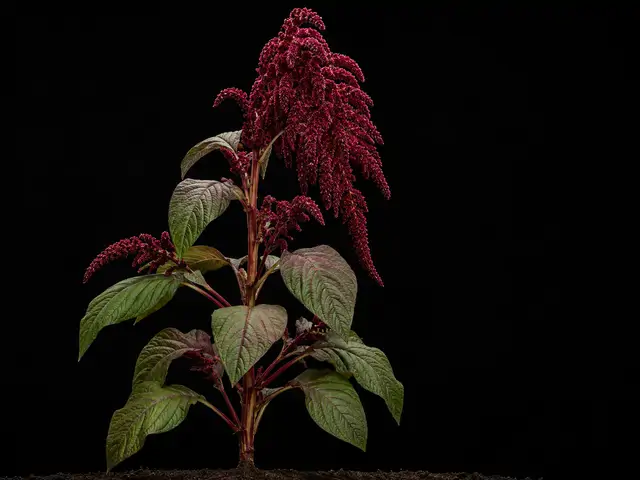
Amaranth
Amaranth is a valued dual crop - nutritious cooked leaves and a gluten-free grain - with a few honest cautions. The leaves, like their relatives spinach and chard, are high in OXALATES and can accumulate NITRATES in heavily fertilized soil, so eat them COOKED and in normal amounts (moderate if prone to kidney stones). The raw grain contains antinutrients and is meant to be COOKED, popped, or baked, not eaten raw in quantity. With those steps, both leaf and grain are safe, wholesome foods.
Overview
A dual-purpose, heat-loving pseudo-grain: showy crimson and gold seed heads give a tiny gluten-free, protein-rich grain, while the young leaves are one of the world's most widely eaten cooked greens - all on a tough, drought-tolerant plant that was a staple of the Aztecs.
Amaranth is a spectacular dual crop - a grain and a leafy green in one dramatic, heat-loving plant. The grain types (Amaranthus cruentus, A. caudatus, and A. hypochondriacus) throw up bold seed heads, upright plumes or dramatic drooping tassels in crimson, magenta, gold, and green, that yield thousands of tiny gluten-free seeds prized for their protein. At the same time, the young leaves are edible and, cooked, are one of the most widely eaten leafy greens on earth, known as callaloo in the Caribbean, een choy or Chinese spinach in Asia, and thotakura in India. Few crops give you both a grain and a green from the same beautiful plant.
It is also refreshingly tough. Amaranth is a warm-season, drought-tolerant C4 plant that thrives in the heat and dry spells that stress other crops - the opposite of its cool-loving pseudo-grain relative quinoa - which makes it a superb hot-climate staple. This is an ancient plant of the Americas: grain amaranth was a foundational crop of the Aztecs (their huauhtli) and the Andes (kiwicha), grown for millennia before being suppressed by Spanish colonizers and later revived worldwide. Whether you grow it for the grain, the greens, or simply the flamboyant seed heads, amaranth is generous, resilient, and quietly remarkable.
At a glance
- Sun
- Full sun · Part sun
- Water
- Low
- Spacing
- 6–18 in (typ. 12)
- Mature height
- 36–96 in (typ. 72)
- Start by
- Direct sow · Transplant
- Frost
- Tender
- Germination
- 3–14 days (typ. 7) @ 65–85 °F (typ. 75)
- Start indoors
- 4–6 wks (typ. 5) before transplant
When to plant
Zone 7a typical frost: last Apr 10 · first Oct 25
Life stages
- Germination day 0–8 from sowing
-
Sow into warm, frost-free soil, barely coveredevery 3 dAmaranth is a heat-loving, frost-tender crop. Sow the tiny seed very shallow (an eighth to a quarter inch, barely covered) into warm soil (65F or above) after all frost has passed; it germinates in about a week in warmth. In short-season gardens, start it indoors 4-6 weeks early and transplant after frost.
-
Keep the fine seed moist until it sproutsThe seed is minute, so a firm, fine seedbed and even surface moisture give the best stand. Do not bury it deep - light helps germination and deep sowing fails.
Frost killing tender seedlingsPoor stands from seed sown too deepEven emergence in warm soil -
Sow into warm, frost-free soil, barely coveredevery 3 d
- Seedling & thinning day 8–30 from sowing
-
Thin to spacing for grain, or grow thick for greensFor a grain crop, thin seedlings to about 8-18 inches apart so each builds a big seed head. If you want mainly leaves, you can grow them closer and cut young. Amaranth seedlings resemble their weedy pigweed relatives, so sow in rows to tell them from weeds.
-
Weed early while amaranth is smallAmaranth is slow for the first few weeks, then explosively fast. Keep it weeded until it takes off; after that its height and canopy shade out most competition.
Slow early growth then rapid takeoffFlea beetles pitting young leavesWeeds while plants are small -
Thin to spacing for grain, or grow thick for greens
- Leafy growth (greens available) day 35–65 from sowing
-
Cut young leaves as a cooked green (cut-and-come-again)every 10 dAmaranth is a dual crop: harvest the tender young leaves and growing tips as a cooked green (the callaloo, een choy, or thotakura of many cuisines) - pinching tips even makes grain plants bushier. Take a modest share so grain plants still build heads. Cook the leaves (they carry oxalates like spinach).
-
Enjoy the fast, heat-loving growthAmaranth thrives in heat and drought that stress other crops, shooting up 4-8 feet with broad, often red-tinged leaves. It is a light feeder and needs little water once established - do not overfeed, or lush leaves come at the expense of grain.
Rapid tall growth in heatAphids on tipsOverly lush growth from too much nitrogen (fewer seeds) -
Cut young leaves as a cooked green (cut-and-come-again)every 10 d
- Showy seed heads day 70–105 from sowing
-
Watch the dramatic plumes form and fill with seedAmaranth throws up bold, showy seed heads - upright plumes or dramatic drooping tassels in crimson, magenta, gold, or green depending on variety (the drooping red type is the ornamental 'love-lies-bleeding'). The tiny seeds fill within these dense heads over several weeks.
-
Stake tall, top-heavy plants if neededBig grain heads on tall plants can get top-heavy and lodge (flop) in wind, especially in rich soil. In exposed sites, stake or hill soil around the base of tall varieties.
Tall heads becoming top-heavy and prone to lodgingTarnished plant bugs feeding on seed headsBirds starting to work the filling heads -
Watch the dramatic plumes form and fill with seed
- Grain harvest day 110–118 from sowing
-
Harvest grain when seeds shed easily from the headevery 3 dGrain is ready when the heads have matured and seeds shed freely - rub or gently shake a head over your palm, and if a shower of tiny seeds falls, it is ready (a light frost that dries the plant helps). Cut the heads into a bag or bin, or rub the seed straight off dry heads into a container.
-
Dry, thresh, winnow - no hulling neededFinish drying the heads, then thresh (rub or flail to release the seed) and winnow the light chaff away in a breeze. Amaranth's tiny seed has no tough hull to remove, so cleaned seed is ready to cook, pop like miniature popcorn, or grind to flour. Dry it fully before storing.
Shattering (seed dropping) if heads are left too longDamp seed molding - dry it fullyVolunteer seedlings next year from dropped seed -
Harvest grain when seeds shed easily from the headevery 3 d
Harvest
- Style
- One-time harvest
- By weight
- 1–12 oz (typ. 4)
- First production
- 1–1 yrs (typ. 1)
- The seed heads have matured and dried, and seeds shed freely when a head is rubbed or shaken
- A light frost has dried the plant (in cold regions), or the heads have gone papery
- Leaves have mostly yellowed and dropped on grain-type plants
Watch out for
Birds & Wildlife Wildlife MediumAug, Sep, Oct
The berries are prized by birds, chipmunks, mice, turtles, and other wildlife, which often strip a patch of ripe fruit before a forager can gather much - a sign of the plant's ecological value as much as a nuisance.
Watch for: Ripe berries disappearing overnight, and birds and small mammals working the patch at dawn and dusk.
Prevent: Check the patch daily at peak ripeness and pick promptly; net a cultivated patch if you want the berries for yourself, though wildlife value is part of the plant's point.
Treat: Pick ripe berries as soon as they color and soften; accept that a foraged patch is shared with the wildlife that depends on it.
The main harvest-time competitor for a small grain patch - net or harvest promptly.
Tarnished Plant Bug Pest MediumJul, Aug, Sep
A small mottled brown true bug whose nymphs and adults feed on developing flowers and seeds, killing seed cells so the berry can't swell evenly - the classic cause of 'catfaced' (button-tipped, misshapen) fruit.
Watch for: Berries that are hard, seedy, and knobby or shrunken at the tip; small pale-green nymphs in the blossoms when tapped over a white surface.
Prevent: Keep the surrounding area mowed and weed-free (weeds and legumes host them), and use floating row cover over early blooms in problem areas.
Treat: Row cover during bloom is the cleanest fix; where damage is heavy, targeted insecticide at early bloom, timed to protect pollinators, reduces the next generation.
Chiefly a concern for a grain harvest, where it thins seed fill; incidental on leaf-grown amaranth harvested before flowering.
Aggressive Self-Seeding & Spread Disorder MediumSep, Oct, Nov
The defining management issue: river oats seeds around prolifically and also creeps by rhizome, so it readily colonizes beyond where it was planted and can crowd a small or formal bed - a horticultural nuisance, not a hazard.
Watch for: Volunteer seedlings appearing well beyond the parent clump (especially in spring), and the clump widening year to year.
Prevent: Site it where naturalizing is welcome, deadhead or cut the seedheads before they ripen and drop each fall, and edge or divide the clump to limit rhizomatous creep.
Treat: Pull volunteer seedlings while small, cut off seedheads before they mature, and dig out or edge back unwanted spread; the variegated 'River Mist' self-sows less.
A double-edged trait: free future crops for some gardeners, a weeding chore for others - manage by harvesting before heavy seed drop.
Aphids Pest LowJun, Jul, Aug
Small soft-bodied sap-suckers clustering on tender tips and buds, excreting sticky honeydew.
Watch for: Colonies on new growth and flower buds, sticky residue, curling shoots, attending ants.
Prevent: Avoid excess nitrogen; encourage ladybugs and lacewings (zinnia flowers help feed them).
Treat: Hose off or use insecticidal soap. Rarely serious on vigorous zinnias.
A minor nuisance on amaranth - rarely warrants action on a healthy plant.
Flea Beetles Pest LowMay, Jun, Jul
Tiny dark beetles that jump like fleas and chew shot-hole pinpricks in leaves - a top brassica pest that hammers turnip foliage and can lace the greens, worst on seedlings in warm dry spells.
Watch for: Clusters of tiny round holes riddling the leaves; the beetles springing away when disturbed; stunted, lacy seedlings.
Prevent: Float row cover from sowing (the best defense), sow in cooler weather, keep the bed watered, and clear crop debris that shelters overwintering beetles. Fall crops face lighter pressure.
Treat: For heavy pressure, kaolin clay or spinosad; light feeding is tolerated, especially if you want roots more than perfect greens. Rotate away from brassica beds.
Mainly a seedling and cosmetic pest on amaranth - the vigorous mature plant shrugs off light damage.
Good & bad neighbors
Varieties · 5
A top grain variety bred for heavy yields of pale, easily cleaned seed on big golden-tan heads, popular with home grain growers for its productivity and mild flavor. Tall and vigorous, it is the go-to when the goal is a real grain harvest.
A striking heirloom grown by the Hopi as a food and a natural red dye, with intensely deep crimson-magenta leaves and heads. Triple-purpose - the young leaves are excellent greens, the seed is good grain, and the plant yields a vivid natural coloring. Beautiful and useful.
The famous ornamental amaranth with long, dramatic drooping crimson tassels, and also the Andean grain 'kiwicha' - so it is as edible as it is showy. Its cascading blood-red plumes make it a favorite ornamental that also yields pale, protein-rich grain.
A modern grain amaranth bred for the North American plains, selected to be shorter, more uniform, and more lodging-resistant than heirloom types while yielding heavily - a practical, reliable choice for a clean grain harvest with less flopping.
A fast leaf-type amaranth (vegetable amaranth) grown mainly for its tender, richly red-and-green cooked greens, ready in weeks and productive all summer as a cut-and-come-again crop. The choice when you want callaloo-style greens rather than grain.
Grow
Direct sow the tiny seed shallow into warm soil after frost (or transplant in short seasons) in full sun, thin for grain or grow thick for greens; it is heat- and drought-tolerant and largely self-sufficient once up.
Amaranth is easy if you wait for warmth. It is frost-tender and heat-loving, so direct sow the tiny seed very shallow (barely covered, an eighth to a quarter inch) into warm soil, 65F or above, after all frost has passed - there is no benefit to rushing it into cold ground. In short-season gardens, start it indoors 4-6 weeks early and transplant after frost so grain types have the long warm season they need. Give it full sun and a firm, fine seedbed for the small seed; sow in defined rows so you can tell the seedlings from their weedy pigweed cousins.
Once up, decide the crop's purpose. For grain, thin plants to roughly 8-18 inches apart so each builds a large seed head; for greens, grow them closer and cut young. Amaranth is slow for the first few weeks, so weed it early, then it takes off explosively, reaching 4-8 feet. It is a light feeder that is notably drought- and heat-tolerant once established, and it actually resents rich, over-fertilized ground, which pushes lush leaves at the expense of seed and encourages tall plants to flop. Give it warmth, sun, lean-to-moderate soil, and modest water, and it largely grows itself.
Care through the season
Weed while young, water sparingly, avoid overfeeding, stake tall top-heavy heads if the site is windy, and watch for flea beetles, tarnished plant bugs on the heads, and birds as the seed ripens.
Amaranth asks for little care once it is growing. Keep it weeded until it shades the ground, then let its height do the work. Water only moderately - it is genuinely drought-tolerant and dislikes wet feet - and do not overfeed, since too much nitrogen grows leafy, floppy plants with less grain. The main structural issue is lodging: tall plants carrying big, heavy seed heads can flop in wind, especially in rich soil, so stake or hill soil around the base of tall varieties in exposed sites, or choose shorter grain types.
Pests are usually minor on this tough plant. Flea beetles may pit young leaves, aphids can gather on tips, and tarnished plant bugs (lygus) sometimes feed on developing seed heads and reduce grain fill - all rarely serious on a vigorous stand. In wet soils, watch for root rot. As the heads mature, birds become the main competitor for the ripening seed, so net small plots or harvest promptly. One long-term note: amaranth self-sows freely (it is closely related to weedy pigweeds), so any seed you let drop will volunteer next year - a bonus or a mild weeding chore depending on your point of view.
Harvest
Harvest young leaves through the season as a cooked green, and take the grain when the seeds shed freely from the dried heads - then thresh and winnow, with no hull to remove before popping, cooking, or milling.
Amaranth offers two harvests. The leaves come first and all season: pick the tender young leaves and growing tips for cooking (pinching tips even makes grain plants bushier), taking a modest share so grain plants keep building heads. Cook the greens like spinach - they are mild and nutritious but, like their spinach and chard relatives, high in oxalates, so best cooked and eaten in normal amounts.
The grain is ready when the heads have matured and dried and the seeds shed freely - rub or gently shake a head over your palm, and if a shower of tiny seeds falls, harvest (a light frost that dries the plant helps). Cut the heads into a bag or bin, or rub the seed straight off. Then finish drying and do the ancient two-step: thresh (rub or flail to release the seed) and winnow the light chaff away in a breeze or before a fan. The great convenience is that amaranth's tiny seed has no tough hull to remove (unlike buckwheat), so cleaned seed is ready to use - popped like miniature popcorn, cooked into porridge, or ground to a protein-rich flour. Dry it thoroughly before storing, and it keeps for a year or more cool, dry, and airtight.
Nutrition
A nutritional double: gluten-free grain rich in protein (high in the amino acid lysine that cereals lack), iron, magnesium, and calcium, plus leaves that are among the most nutritious cooked greens - both best cooked.
Amaranth delivers on two fronts. The grain is gluten-free and unusually protein-rich for a seed crop, and it is notably high in lysine, the essential amino acid that true cereal grains lack, so it complements grains like corn and wheat especially well. It also provides good fiber, iron, magnesium, phosphorus, and calcium (amaranth is a standout plant source of calcium), plus manganese and antioxidants. Popped or cooked, it is a wholesome, mineral-dense addition to a gluten-free diet.
The leaves are a nutritional powerhouse in their own right - among the most nutritious cooked greens, rich in vitamins A and C, folate, iron, and calcium - which is exactly why amaranth greens are a staple vegetable across Africa, Asia, the Caribbean, and Latin America. The caveats are the familiar ones for this plant family: the leaves are high in oxalates and can accumulate nitrates in over-fertilized soil, so eat them cooked and in normal amounts, and the raw grain carries antinutrients and is meant to be cooked, popped, or baked rather than eaten raw. With those simple steps, amaranth is one of the most complete grain-and-green crops a gardener can grow.
History
A sacred staple grain of the Aztecs (huauhtli) and the Andes (kiwicha) for thousands of years, amaranth was suppressed by Spanish colonizers for its ceremonial role and has since been revived as a global grain and green.
Amaranth is one of the ancient foundational crops of the Americas. Grain amaranth was domesticated in Mesoamerica (and, as kiwicha, in the Andes) thousands of years ago, and it became a central staple of the Aztec empire, called huauhtli, grown on a vast scale and as important to them as maize and beans. It was woven deeply into religious life: amaranth seed and dough were shaped into figures of gods and eaten in sacred ceremonies.
That ceremonial role made it a target. After the conquest, the Spanish suppressed amaranth cultivation - by some accounts banning it - to break Indigenous religious practice, and the once-great grain dwindled to a minor crop surviving in scattered highland communities for centuries. Meanwhile, the genus itself is broad and cosmopolitan: some Amaranthus species are native across the Americas (including weedy pigweeds), while the cultivated grain types trace to these American domestications, and leaf amaranths became beloved vegetables across Africa and Asia. In the late twentieth century amaranth was 'rediscovered' for its exceptional nutrition and resilience, championed as a crop for the future, and today it is grown worldwide once again - a resilient survivor carrying a long and sacred history.
Growing across climates
A heat- and drought-loving warm-season crop for hot climates: frost-tender but tough in heat and dry spells, direct-sown in warm soil in most zones and started indoors for grain in short-season gardens.
Amaranth is a warm-season, heat- and drought-tolerant crop, and it shines exactly where cool-season grains struggle. Hot zones 8-10: amaranth is in its element, revelling in summer heat and dry spells that wilt other crops - direct sow from spring through mid-summer for grain and repeated leaf harvests over a long season. Zones 5-8: excellent as a summer crop, direct sown after frost into warm soil; grain types have ample time to fill and ripen before fall frost. Short-season zones 3-4: the frost-free window is tight for grain, so start plants indoors 4-6 weeks early and transplant after frost, or simply grow amaranth for its fast leaf harvests, which come long before grain would ripen.
Its one hard limit is frost: amaranth is tender at both ends of the season, killed by frost, so it must have a warm, frost-free run. Within that, its C4 metabolism, deep tolerance of heat and drought, and indifference to poor soil make it one of the most climate-resilient food crops available - a genuine hot-weather, low-water staple as the growing season warms.
Troubleshooting
Floppy plants are lodging from wind, rich soil, or overfeeding; lush leaves but little grain mean too much nitrogen; frost-killed plants went out too early or too late; volunteers everywhere mean seed was left to drop.
Tall plants flop over ('lodging'): big heavy heads catch the wind, worse in rich soil - stake or hill soil around the base of tall varieties, grow shorter grain types, and do not overfeed. Lush leafy plants with little grain: too much nitrogen pushes foliage at the expense of seed - grow amaranth lean, since it prefers moderate-to-poor soil. Plants blackened and collapsed: frost - amaranth is tender at both ends of the season; sow only after frost into warm soil and harvest before fall frost. Poor or empty seed set: heads fed on by tarnished plant bugs, or the season ended (frost) before grain filled - manage bugs and, in short seasons, start plants early. Amaranth volunteering everywhere next year: it self-sows freely like its pigweed relatives - to limit it, harvest before heavy shattering and hoe out volunteers (or welcome them as free greens). Small pits in young leaves: flea beetles - usually cosmetic on a vigorous plant; use row cover early if severe. Seedlings hard to identify: they resemble weedy pigweed - sow in defined rows to distinguish crop from weeds. Bitter or unpalatable raw grain: amaranth grain is meant to be cooked, popped, or baked, not eaten raw.
Cook it
All 1 recipe →No grower tips for Amaranth yet — yours could be the first.
Sign in to share what works in your garden.