Add it to your home screen and it opens full screen — no browser bars, one tap away, and everything stays signed in. Free, nothing to download from an app store.
- Tap the Share button in your browser
- Scroll down and choose “Add to Home Screen”
- Open GrowSomeFood from your home screen
- Open your browser’s menu
- Choose “Add to Home screen” or “Install app”
- Open GrowSomeFood from your home screen
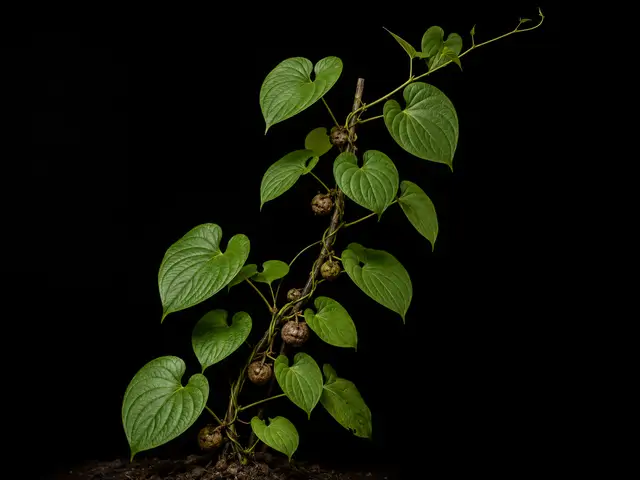
Air Potato
Do not eat air potato. Although it's a wild yam, the invasive US strain produces bulbils and tubers that are bitter and toxic, and people have been poisoned mistaking them for edible yams - so treat all its 'potatoes' as inedible. The main problem, though, is ecological: it is a fast-smothering invasive vine that blankets and kills native trees and shrubs, spreading from countless aerial bulbils. Do not plant it; when clearing it, collect and bag every bulbil (they sprout readily).
Overview
A fast-smothering invasive vine that grows up to 8 inches a day and blankets trees and shrubs, spreading from countless potato-like aerial bulbils. The invasive strain is toxic, not edible. Never plant it; this entry is for identifying and controlling it.
Air potato (Dioscorea bulbifera) is one of the fastest and most smothering invasive vines in the warm South, especially severe in Florida and along the Gulf coast. A twining vine with broad heart-shaped leaves, it can grow an astonishing 8 inches or more in a day, racing up and over trees, shrubs, and fences to blanket and shade out everything beneath it. Its defining feature - and the engine of its spread - is the mass of warty, potato-like aerial bulbils it hangs along its stems, each of which can drop to the ground and sprout a new vine.
It's often mistaken for an edible yam, but the invasive strain in the US is toxic: its bulbils and tubers are bitter and contain harmful compounds, and people have been poisoned mistaking them for food - so treat all of its 'potatoes' as inedible. This entry is here to help you recognize and control air potato, and to point you to native vines instead. Control hinges on one thing above all: collecting the bulbils, patiently, over several years. Never plant it.
At a glance
- Sun
- Full sun · Part sun · Part shade
- Water
- Medium
- Spacing
- 24–480 in (typ. 120)
- Mature height
- 120–840 in (typ. 360)
- Start by
- Tubers
- Frost
- Tender
When to plant
No planting window on record for this zone.
Life stages
- Fast smothering growth & bulbils (identify & control) Apr, May, Jun, Jul, Aug, Sep, Oct (yearly)
-
Recognize it: heart-shaped leaves, potato-like aerial bulbilsAir potato is a fast, twining vine with broad, heart-shaped leaves (alternate, with long stalks and prominent veins) that can grow 8 inches or more a day, blanketing trees and shrubs. Its signature: in summer and fall it produces warty, potato-like AERIAL BULBILS (little tubers) hanging in the leaf axils along the stems. Heart-shaped leaves plus hanging 'potatoes' on a fast vine is diagnostic.
-
Collect every bulbil; dig the underground tuberThe key to control is the bulbils: hand-collect and bag ALL of them (they sprout readily and each starts a new plant) before they drop, and repeat over years to exhaust the supply. Dig out the underground tuber too. Cutting the vine helps relieve smothered plants but won't stop it while bulbils and the tuber remain. Never compost or dump bulbils.
Fast twining vine with broad heart-shaped leaves blanketing trees and shrubsWarty potato-like aerial bulbils hanging in the leaf axilsBulbils on the ground sprouting into new vines -
Recognize it: heart-shaped leaves, potato-like aerial bulbils
- Winter die-back (bulbils & tuber survive) Jan, Feb, Mar, Nov, Dec (yearly)
-
Vine dies back; bulbils and tuber persistFrost or cool weather kills the top growth, but the dropped aerial bulbils and the underground tuber survive and resprout in spring - so winter die-back is not control. The bare season is a good time to collect fallen bulbils off the ground and dig the underground tuber before they resprout.
-
Winter bulbil sweep and tuber digSweep the ground for fallen bulbils and bag them, and dig out the underground tuber while the vine is dormant and easier to trace. Every bulbil removed now is one fewer vine in spring. Keep after it for several years - a single missed bulbil can restart the infestation.
Dead top growth over surviving bulbils and tuberFallen bulbils on the ground ready to sproutVigorous spring resprouting from bulbils and the tuber -
Vine dies back; bulbils and tuber persist
Watch out for
Fast-Smothering Vine Invasion (ecological harm) Disorder HighApr, May, Jun, Jul, Aug, Sep, Oct
The core hazard is ecological: air potato grows explosively (up to 8 inches a day) and blankets trees, shrubs, and understory, shading out and collapsing native vegetation, and it's especially damaging in Florida's native hammocks and forest edges.
Watch for: Fast vines with heart-shaped leaves blanketing trees and shrubs, and native plants collapsing under the vine's weight and shade.
Prevent: Never plant it; collect bulbils to stop spread; cut vines off smothered plants and control early.
Treat: Relieve smothered plants by cutting vines, but focus on collecting bulbils and digging the tuber over several years; foliar herbicide and (in FL) biocontrol beetle assist.
Bulbil Spread & Resprouting Disorder HighJun, Jul, Aug, Sep, Oct, Nov, Dec
Why it spreads so fast and resists control: each vine produces numerous potato-like aerial bulbils that drop and sprout new plants, spread readily by water, mowing, equipment, and dumped material, and resprout along with the underground tuber - a single missed bulbil restarts the infestation.
Watch for: Bulbils hanging in leaf axils and littering the ground, new vines sprouting from fallen or moved bulbils, and resprouting from the tuber.
Prevent: Collect and bag all bulbils before they drop; never compost or dump bulbils or vines; clean equipment.
Treat: Repeated bulbil collection (before and after drop) plus tuber digging over several years; bag all material for disposal.
Toxic Bulbils & Tubers Disorder MediumJun, Jul, Aug, Sep, Oct, Nov, Dec
A direct hazard to people: the invasive US strain's bulbils and tubers are bitter and toxic, and people have been poisoned mistaking them for edible yams - so despite being a wild yam, its 'potatoes' must not be eaten.
Watch for: Anyone tempted to forage or eat the potato-like bulbils or tubers, mistaking them for edible yams.
Prevent: Do not eat any part; treat all bulbils and tubers as inedible; label or educate others clearing it.
Treat: For ingestion, contact poison control; remove and bag the plant to eliminate the temptation and the invasion.
Varieties · 2
The invasive yam vine: a fast twining vine with broad heart-shaped leaves that grows up to 8 inches a day and smothers trees and shrubs, spreading from warty potato-like aerial bulbils (each sprouts a new plant) and an underground tuber. The US strain's bulbils and tubers are toxic, not edible - identify and control, never plant.
Instead of air potato, plant native vines for cover and wildlife value without the smothering invasion - coral honeysuckle, crossvine, native passionflower (maypop), or Carolina jessamine. Ask a local native-plant source for the best options for your area.
Grow
How to recognize it and why never to plant it: a fast twining vine with broad heart-shaped leaves and warty potato-like aerial bulbils, that grows explosively and smothers trees and shrubs.
You should never plant air potato - recognizing it is what counts. It's a fast, herbaceous twining vine with broad, heart-shaped leaves (alternate, long-stalked, with prominent curved veins) that can climb high into trees. Its unmistakable feature is the aerial bulbils: warty, rounded, potato-like little tubers, from marble- to fist-sized, that hang from the leaf axils along the stems in summer and fall. It also forms an underground tuber. The vine grows explosively - up to 8 inches a day in warm weather - blanketing and smothering trees, shrubs, and fences.
It spreads almost entirely by those bulbils: they drop, roll, wash, or get moved, and each sprouts a new plant, so a single vine seeds the ground with dozens of future vines. (It rarely sets true seed in the US.) It thrives in warm climates, is killed back by frost but resprouts from bulbils and the tuber, and loves disturbed ground, hammocks, forest edges, and urban areas. Understanding this - explosive growth, smothering coverage, and prolific bulbil spread - is exactly why it belongs in the 'never plant' category, and why control focuses relentlessly on the bulbils.
Propagation & seed saving
How it spreads - almost all by bulbils: each vine hangs dozens of potato-like aerial bulbils that drop and sprout new plants, plus an underground tuber that resprouts; true seed is rare in the US.
Air potato's spread is a bulbil story. Through the growing season a vine produces numerous aerial bulbils in its leaf axils, and in fall these drop to the ground, where each one readily sprouts a new vine. They also spread when moved by water, mowing, equipment, dumped yard waste, or animals, so an infestation multiplies fast and jumps to new sites. On top of the bulbils, the vine forms an underground tuber that survives winter and resprouts. In the US it rarely produces true seed, so the bulbils and tuber do essentially all the work.
This is the crux of control: because every bulbil is a potential new plant, collecting and bagging the bulbils - before they drop, and again off the ground - is the single most important task, repeated over several years to exhaust the supply, along with digging the tuber. Cutting the vine relieves smothered plants but doesn't stop the spread while bulbils and the tuber remain. In Florida, a biocontrol beetle (the air potato leaf beetle) has been released to help suppress it, but hand-collection of bulbils remains central for homeowners.
Care
Control, not care: collect and bag every aerial bulbil (each sprouts) before and after they drop, dig the underground tuber, repeat for several years, never compost or dump bulbils, and replant natives.
For air potato, 'care' means relentless bulbil collection. Because each bulbil sprouts a new vine, the core of control is to hand-collect and bag all the aerial bulbils - ideally before they drop in fall, and again by sweeping the ground for fallen ones - and to dig out the underground tuber. Do this repeatedly, over several years, to exhaust the bulbil supply; a single missed bulbil can restart the infestation. Cutting or pulling the vine helps relieve smothered trees and shrubs, but on its own it won't stop the plant while bulbils and the tuber remain, so pair it with collection.
Crucially, never compost or dump bulbils or vines - they sprout from tossed material and spread infestations; bag them for disposal and clean equipment. Do not eat the bulbils or tubers (the invasive strain is toxic). For larger infestations, foliar herbicide on the growing vine can reduce vigor and tuber reserves over time, and in Florida the released air potato leaf beetle provides area-wide biocontrol - but bulbil collection is still key for a yard. Once you've cleared it, replant with native vines - coral honeysuckle, crossvine, or a native passionflower - to fill the space. For big infestations, get guidance from your local extension office or invasive-species program.
Nutrition
Do not eat it - the invasive US strain's bulbils and tubers are bitter and toxic and have poisoned people who mistook them for yams. Ecologically its impact is strongly negative: it smothers and kills native trees and shrubs.
Despite being a wild yam, air potato is not a safe food in the US. While some cultivated forms of the species are eaten in parts of Asia and Africa after careful processing, the invasive strain established in Florida and the Southeast produces bitter, toxic bulbils and tubers that contain harmful compounds, and people have been poisoned mistaking them for edible yams. Treat all of its 'potatoes' as inedible - this is not a foraging opportunity.
Ecologically, its impact is strongly negative. It's one of the fastest-smothering vines around: it blankets and shades out native trees, shrubs, and understory, collapsing them under its weight and darkness and converting diverse habitat - including sensitive Florida hammocks and forest edges - into air-potato monoculture. It offers essentially no wildlife benefit to offset that damage. The meaningful 'nutrition' story is what it destroys, plus a clear safety warning: air potato is a toxic, smothering invasive to remove, not a yam to harvest - so remove it (bulbils and all) and replant safe native vines instead.
History
Introduced to the US in the early 1900s as a possible food and medicinal yam, air potato escaped in Florida to become one of the state's worst invasive vines, now fought partly with a biocontrol beetle.
Air potato was introduced to the United States in the early 1900s (reaching Florida around 1905) as a possible food and medicinal plant - part of the era's enthusiasm for testing exotic yams and other economic crops. In the warm, humid Florida climate, free of its natural controls, it escaped and exploded, spreading from its abundant bulbils into hammocks, forests, edges, and urban areas, and became one of the state's most notorious invasive vines, listed as a noxious weed.
Modern management has taken an interesting turn: after years of hand-pulling, bulbil-collection drives, and herbicide, researchers introduced the air potato leaf beetle (Lilioceris cheni), a host-specific biocontrol from the plant's native range, which has provided meaningful area-wide suppression in Florida. Its story is a classic cautionary one - an exotic yam brought in as a hopeful crop that became a landscape-smothering menace - with a hopeful modern coda in biocontrol. For gardeners, the lesson and the task are simple: never plant it, recognize the hanging 'potatoes,' and collect every bulbil you can.
Troubleshooting
Confirm it (fast twining vine, broad heart-shaped leaves, warty potato-like aerial bulbils), don't plant or eat it, collect and bag every bulbil and dig the tuber over several years, and replant natives.
Is this air potato? Look for a fast twining vine with broad, alternate, heart-shaped leaves and, in summer and fall, warty, potato-like aerial bulbils hanging from the leaf axils - plus an underground tuber. The hanging 'potatoes' are diagnostic. Can I eat the bulbils? No - the invasive US strain is bitter and toxic and has poisoned people; do not eat them. How do I get rid of it? Collect and bag every aerial bulbil (each sprouts a new vine) before and after they drop, dig the underground tuber, and repeat for several years to exhaust the supply; cutting the vine relieves smothered plants but won't stop it alone. Why does it keep coming back? A single missed bulbil or the tuber will resprout - persistence over years is essential. What do I do with the bulbils? Bag them for disposal - never compost or dump them, as they sprout from tossed material. Is there help for big infestations? In Florida the air potato leaf beetle provides biocontrol; extension offices can advise. What should I plant instead? Native coral honeysuckle, crossvine, or passionflower.
Growing across climates
Worst in warm, frost-free to near-frost-free areas - Florida and the Gulf-coast South (roughly zones 8-11); frost knocks back the top but bulbils and the tuber survive, and warm climates let it grow explosively.
Air potato is most destructive in warm, humid, frost-free to near-frost-free areas - it's a tropical vine, and its worst impacts are in Florida and along the Gulf-coast South (roughly zones 8-11). There, long warm seasons let it grow explosively and blanket vegetation, and it invades hammocks, floodplains, forest edges, disturbed ground, and urban areas with ease. It's especially damaging in Florida's sensitive native hammocks and natural areas.
Because it's frost-tender, cold winters knock back the top growth farther north - but the bulbils and underground tuber survive to resprout, so even in areas with frost it can persist and spread where summers are warm. Its spread is driven by the bulbils, which move readily with water, machinery, and dumped material, so vigilance matters wherever the climate is warm enough. Wherever you are in its range, the guidance holds: never plant it, learn to recognize the hanging bulbils, and control it by collecting every bulbil and digging the tuber, year after year, until it's gone - then replant natives.
No grower tips for Air Potato yet — yours could be the first.
Sign in to share what works in your garden.